|
|
|
|||||||||
 |
||||||||||
| John Lavery (1856–1941) | ||||||||||
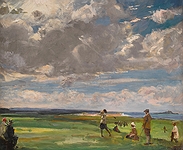
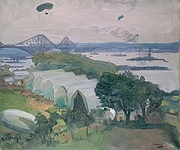
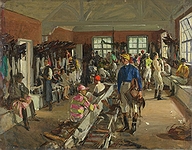
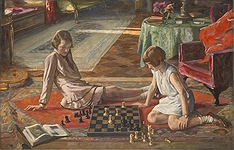
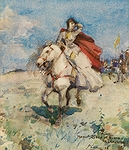
| Born in Belfast, Lavery became one of the foremost portrait painters of his time and a prominent figure in the Glasgow school. He began his artistic journey as an apprentice to a photographer in Glasgow at the age of seventeen, before deciding to pursue painting. His education took him to Glasgow, London, and Paris, where he joined the Atelier Julian in 1881. Initially exhibiting in Glasgow during the 1870s, he gained recognition in the 1880s, regularly displaying his work at the Royal Glasgow Institute of the Fine Arts, and extending his exhibitions to London, Europe, and North America. Early in his career, Lavery drew influence from the Glasgow Boys and later from British and American artists while in Paris. In 1892, he became an associate of the Royal Scottish Academy, achieved academician status in 1896, and went on to serve as vice-president of the International Society of Sculptors, Painters, and Gravers. Renowned for his skill, energy, and versatility, he earned considerable fame for his portraits, particularly of women, as well as figure studies. Though proficient in photography, a medium he often used for reference, he kept this practice hidden, as it was regarded as an unworthy tool in the art world at the time. His oeuvre spans a wide variety of subjects, from street scenes and war imagery to landscapes and portraits of people, with notable works created in exotic locations such as Tangiers and other parts of North Africa. Lavery died in Kilkenny, Ireland. | ||||||||||
| |
||||||||||
|
|
||||||||||
| |
||||||||||
  |
||||||||||


 Art
Art