
|
|
|
|||||||||
 |
||||||||||
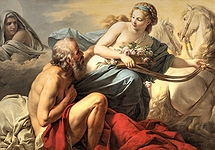
| Louis-Jean-François Lagrenée (1725–1805) | ||||||||||
| A French painter, born in Paris, Lagrenée was a pupil of Carle Van Loo. In 1749, his painting of Joseph interpreting Pharaoh’s Dream won the prestigious prize from the Royal Academy of Painting, earning him a pension to study in Rome. He returned to Paris in 1753, and in 1755, he was admitted as a member of the Academy, with his admission piece being The Rape of Deianeira by the Centaur Nessus. By then, his reputation had reached such heights that Empress Elizabeth of Russia invited him to St Petersburg, where she appointed him director of the Academy and her principal painter. On his return to France in 1781, he was named director of the French Academy in Rome, where he created some of his finest works, including the well-known Indian Widow. His paintings, often based on sacred, historical, or mythological themes, were widely engraved. In 1804, Napoleon honoured him with the Legion of Honour. He also etched several small plates, both from his own designs and others, with notable energy and flair. Lagrenée also served as professor-rector at the School of Fine Arts and as honorary conservator and administrator of the Louvre, where he later died. | ||||||||||
| |
||||||||||
 |
||||||||||
|
|
||||||||||
| |
||||||||||
  |
||||||||||


 Art
Art