
|
|
|
|||||||||
 |
||||||||||
| Gustav Klimt (1862–1918) | ||||||||||
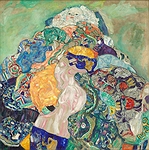
| An Austrian painter born in Vienna, Klimt was a central figure in early modernism, whose work came to define a generation of Viennese art. Educated at Vienna’s School of Applied Arts, he trained in both classical painting and decorative techniques, which instilled in him a command of form while fostering a sensitivity to ornament and surface design, preparing him for his leadership within Austria’s Secession, a local manifestation of Art Nouveau. Drawing inspiration from Byzantine mosaics, Symbolist literature, and the decorative arts, his style combined flowing, organic lines with intricate patterns, lavish ornamentation, and striking use of colour and gold, often subordinating traditional notions of form and space to the rhythms of decoration and natural inspiration. Initially regarded as radical and modern, his work provoked controversy for its sensuality and unconventional approach. Though not universally accepted by the conservative art establishment, Klimt gained significant recognition through his involvement with the Secession movement and prestigious public commissions, which brought him both acclaim and financial reward. His portraits of Viennese society, in particular, made him popular among wealthy patrons, even as some of his more provocative work drew criticism. Later dismissed as outdated, his work was reappraised in the mid-20th century for its technical mastery, imaginative vision, and enduring influence on Austrian modernism. | ||||||||||
. |
||||||||||
| |
||||||||||
 |
||||||||||
| |
||||||||||
  |
||||||||||


 Art
Art