|
|
|
|||||||||
 |
||||||||||
| Jacob Jordaens (I) (1593–1678) | ||||||||||
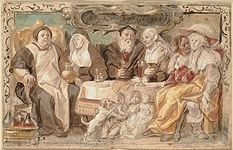
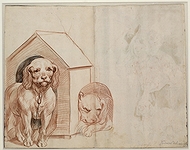
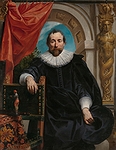
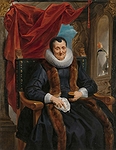
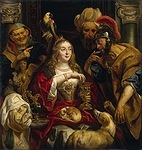
| Born in Antwerp, Jordaens was a pupil of Adam van Noort, an able artist whose character was so depraved that it repelled all his disciples, including Rubens. Jordaens, however, was the only student to remain under his tutelage for any length of time, driven by his desire to win the hand of Noort's daughter, Catharina, whom he eventually married. His early marriage prevented him from carrying out his plan to visit Italy, so he contented himself with copying works by Italian masters such as Titian and Paolo Veronese, which he encountered in Flanders. His growing talent caught the attention of Rubens, who, with his usual generosity, offered help whenever possible. The King of Spain had requested Rubens to create a series of cartoons for tapestry, and Rubens engaged Jordaens to paint them from his designs. In 1638, Jordaens painted the fine landscape Vertumnus and Pomona for the Spanish monarch, which, along with Rubens' Pythagoras, was taken by Joseph Bonaparte when he abdicated the throne of Spain. By 1641, Jordaens had prospered enough to build a grand house on Rue Haute in Antwerp, which he decorated with his own works. His patrons included the King of Sweden and Princess Amelia of Orange. Around 1671, Jordaens and his younger daughter adopted the tenets of Calvinism. He died of the plague in Antwerp in 1678. A prolific artist, Jordaens was particularly suited to the depiction of mythical subjects, animals, and scenes of revelry, rather than sacred or historical themes. His style was a vibrant and expressive form of Baroque, characterised by dramatic use of colour, realism, and dynamic compositions, with a distinctive focus on Dutch realism and Flemish traditions. His few spirited etchings, though hastily executed, reveal a masterful hand. | ||||||||||
| |
||||||||||
|
|
||||||||||
| |
||||||||||
  |
||||||||||


 Art
Art