
|
|
|
|||||||||
 |
||||||||||
 |
||||||||||
 |
||||||||||
|
||||||||||
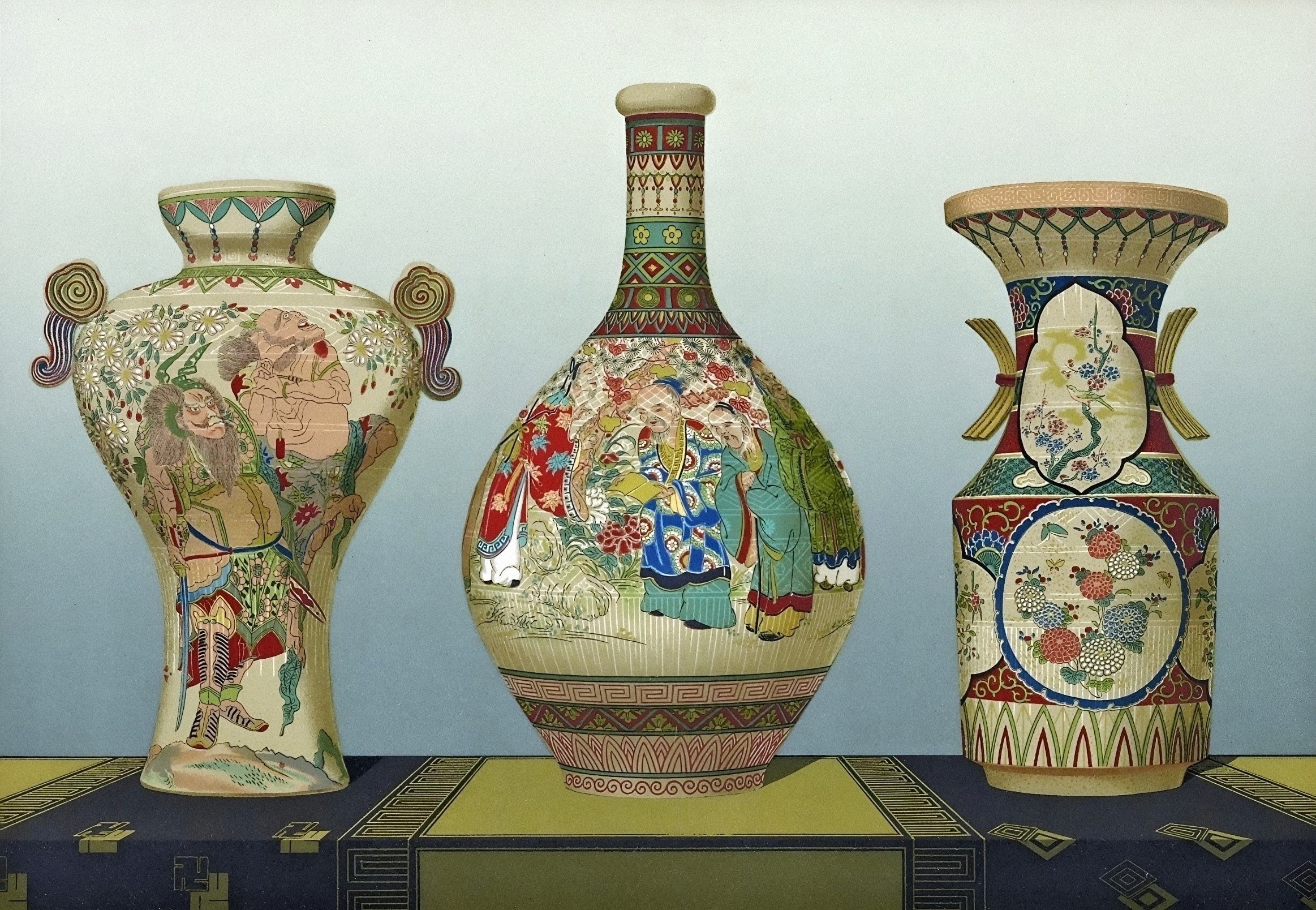
Kaga ware: bottle and two vases Lithograph by Chataignon, c. 1875 |
||||||||||
|
A — Large bottle of Kaga ware, of drab tinted pate, relieved with
white line-work, and covered with a thin bright varnish, crackled. The
decoration is, for the most part, executed in transparent enamel colours,
which allow the white lines of the ground to be seen through them. The
red, black, white, and dark blue enamels, however, are opaque. The geometrical
patterns, which ornament the lower part of the body and the neck, are
well chosen, and arranged very effectively. The body is painted with
a series of aged figures, walking amidst trees and flowers. Height:
19½ inches. |
||||||||||
| Kaga ware is known for its hand-painted decoration and its measured use of colour and is produced through techniques established over generations. It originated in the Kaga domain in the mid-17th century, with the first Kutani kiln established in 1655 during the early Edo period, which lasted from 1603 to 1868. Development took place under the patronage of the Maeda clan throughout the 17th and 18th centuries, with Kutani becoming the most prominent centre. |
||||||||||
 |
||||||||||


