
|
|
|
|||||||||||
 |
||||||||||||
 |
||||||||||||
 |
||||||||||||
|
||||||||||||
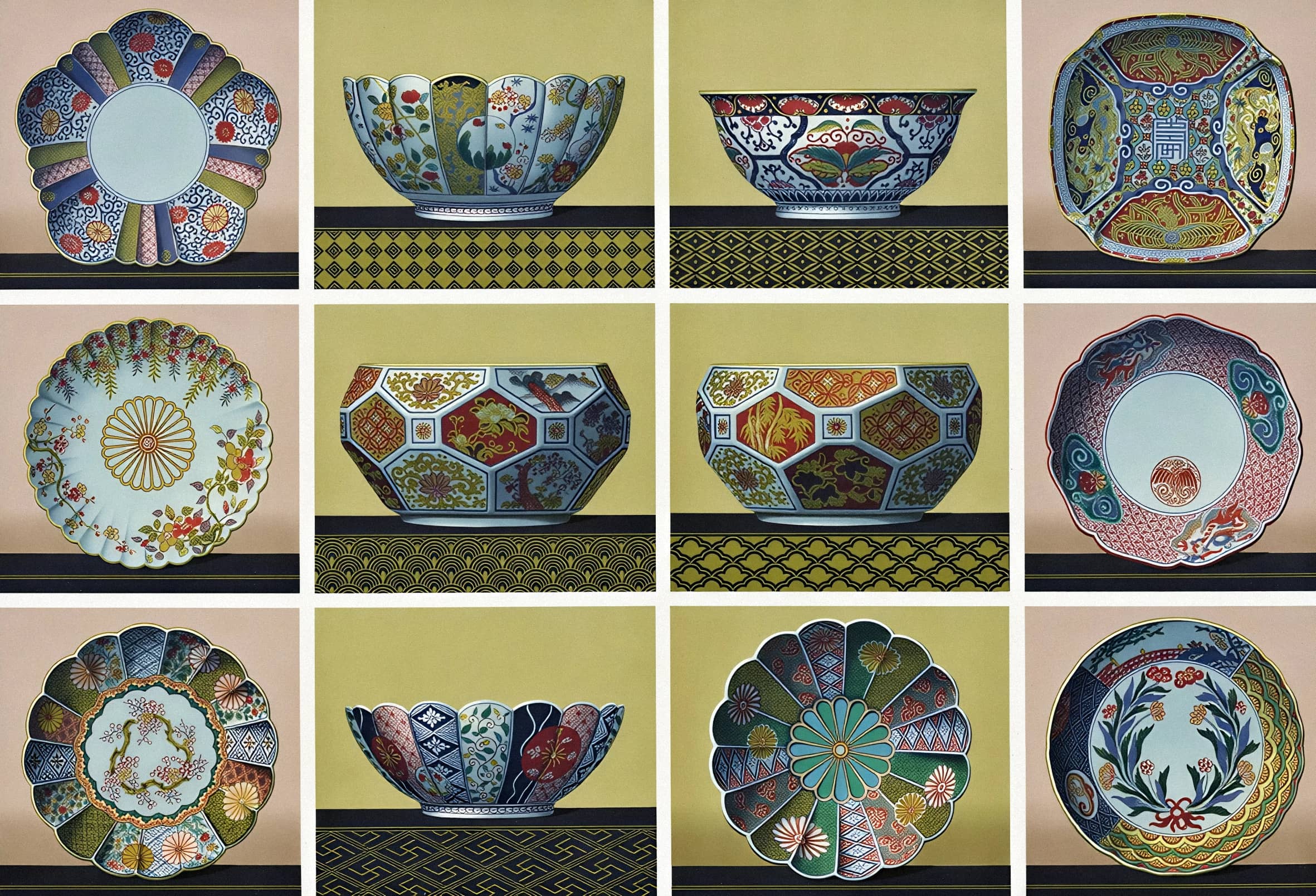
Hizen ware: kikus and basins Lithograph by Chataignon, c. 1875 |
||||||||||||
|
A A — Pair of faceted basins, of fine Hizen porcelain, decorated with
floral designs, scrollwork, and interrupted diapers. Diameter: 6 inches. |
||||||||||||
| Hizen ware, originating from Japan’s Hizen Province (modern-day Saga and Nagasaki Prefectures) during the Edo period, is particularly renowned for its refinement, technical precision, and decorative richness. Emerging in the early 17th century, it was among the first porcelain made in Japan, influenced by Chinese and Korean techniques, but developed into a distinctly Japanese art form. Many associated with the distinctive kiku (chrysanthemum) style are adorned with a broad range of motifs including floral sprays, mume blossoms, dragons, ho-hos, and stylised scrollwork. Diaper patterns feature prominently, applied in radiating compartments, scale-like arrangements, or as intricate backgrounds for medallions and crests, some of which are presented in relief or shaped irregularly. Certain pieces exhibit fluted or faceted forms, enhancing the play of light on their surfaces and adding a sculptural quality to the decoration. The painting styles vary from formal symmetry to a more erratic or asymmetrical distribution of design elements, and in some cases, the use of colour and composition suggests an influence from Dutch decorative traditions, reflecting the international exchanges of the Edo period. Hizen ware became highly sought after both domestically and abroad, particularly through exports by the Dutch East India Company to Europe, where it was prized and even influenced European porcelain production. Its varied forms—such as basins, dishes, and vases—and the sophistication of its decoration demonstrate the artisans’ mastery and the ware’s status as a major achievement in Japanese craftsmanship. |
||||||||||||
 |
||||||||||||


