
|
|
|
|||||||||
 |
||||||||||
| Anselmo Guinea Ugalde (1854–1906) | ||||||||||
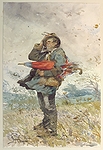
| A Spanish painter, muralist, and watercolourist born in Bilbao, Guinea began his artistic studies under the painter Ramón Elorriaga and later became a pupil of Antonio María de Lecuona in 1870. He soon attracted the attention of Bilbao’s art connoisseurs, who supported his further training. With the backing of a local businessman and politician, Guinea studied at the Escuela Especial de Pintura, Escultura y Grabado in Madrid from 1874 to 1875, then continued his education in Rome between 1875 and 1876. While there, he studied nudes and watercolour at the Chigi Academy and the Spanish Academy, drawing influence from the style and themes of Mariano Fortuny. Upon returning to Bilbao, he focused on watercolour landscapes and traditional scenes of Biscay. In 1879, he was appointed professor at the Escuela de Arte y Oficios de Bilbao and head of the Figure Drawing department. In 1881, he returned to Rome, where he remained until 1887, gaining commissions and recognition for works on historical themes and Italian customs. After returning to Biscay, he resumed teaching and opened a private academy. He also returned to the Basque genre of art, which he had earlier abandoned. Guinea visited Paris several times, first in 1891, where he encountered the social realism of Gustave Courbet. These experiences in Paris had a significant impact on his style, infusing his work with more luminosity and fluidity, influenced by Impressionism, Pointillism, and Japanese prints. Between 1902 and 1905, he visited Rome again, where he revisited social realism and Italian historical themes with his own distinctive reinterpretation. Awarded several prizes throughout his career, Guinea died in Bilbao. In 1906, an exhibition was held in his honour in Biscay. | ||||||||||
| |
||||||||||


 |
||||||||||
|
|
||||||||||
| |
||||||||||
  |
||||||||||


 Art
Art