   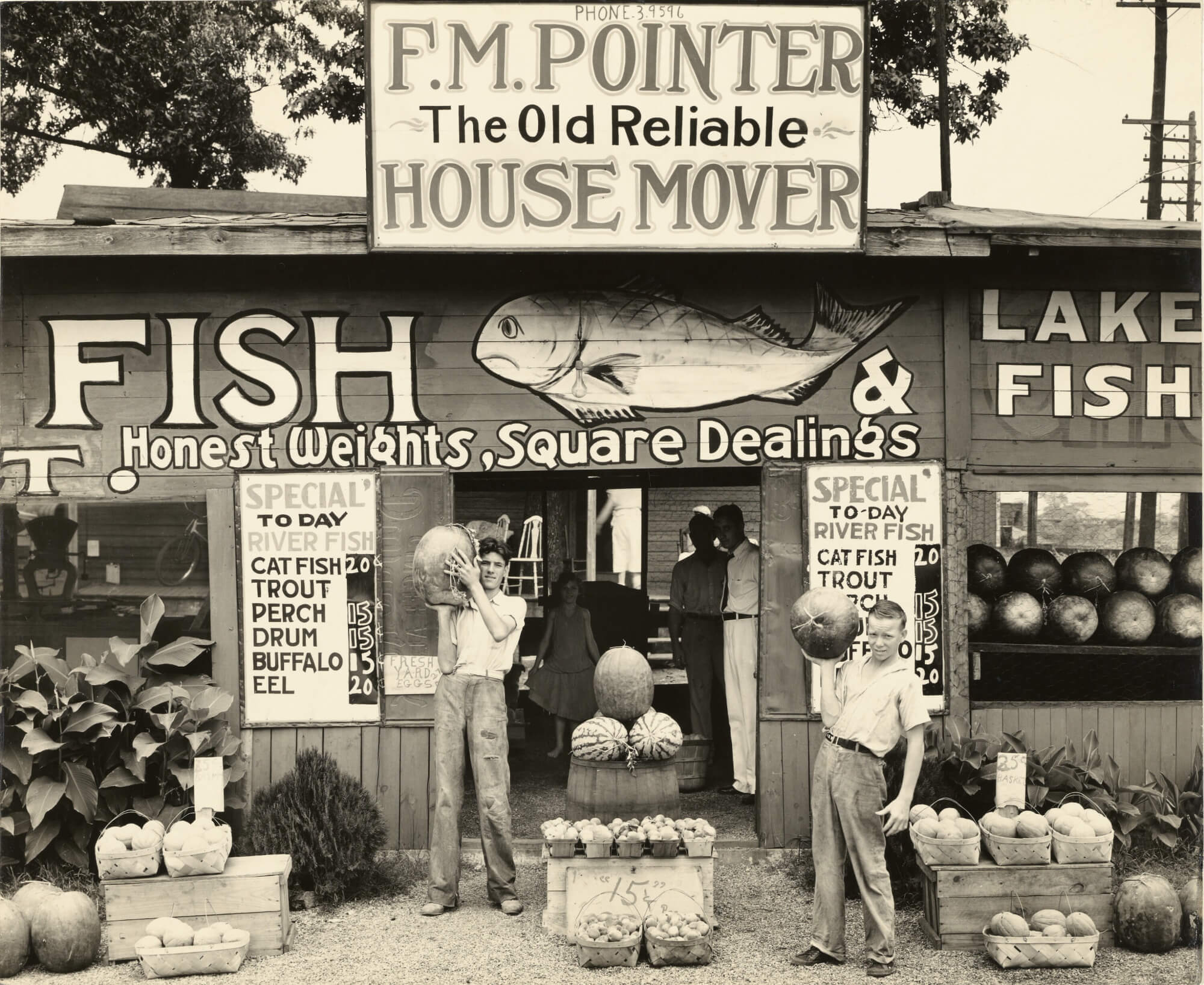
Roadside Stand Near Birmingham / Roadside Store Between Tuscaloosa and Greensboro, Alabama Gelatin silver print, by Walker Evans, 1936 J.P. Getty Museum, Los Angeles Evans’ composition embodies the economic struggles of the era, depicting a small roadside stand that, despite its humble appearance, remains a vital source of livelihood for both its owners and the local community. The neatly arranged produce and goods suggest a sense of order and perseverance, reflecting the resilience of small businesses during the Great Depression, when independent shopkeepers relied on ingenuity and resourcefulness to survive. His stark yet detailed portrayal transforms this seemingly ordinary structure into a quiet yet powerful commentary on American commerce and rural life. The abundance of hand-painted signs covering the facade speaks to a time when advertising was direct and personal, blending necessity with a homespun aesthetic. In the broader context of his work, the image captures the tension between economic hardship and the enduring spirit of self-sufficiency that defined the 1930s South, preserving a moment that is both documentary and deeply evocative.   |
|


