
|
|
|
|||||||||
 |
||||||||||
|
Sinbad the Sailor and Other Stories from the Arabian Nights by Edmund Dulac |
||||||||||
| Sinbad the Sailor • Aladdin and the Wonderful Lamp • The Story of the Three Calendars • The Sleeper Awakened | ||||||||||
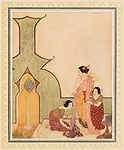
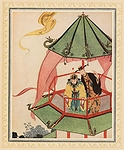
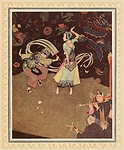
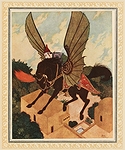
| Over the centuries, a wealth of Eastern folk tales were compiled into the collection known today as The Arabian Nights or The Thousand and One Nights, with some of the most well-known stories being 'Aladdin and the Magic Lamp', 'Ali Baba and the Forty Thieves', and 'The Seven Voyages of Sindbad the Sailor'. Each of these tales brings to life unforgettable images: the cave and the genie in 'Aladdin and the Magic Lamp', the enormous jars and boiling oil in 'Ali Baba and the Forty Thieves', and the whale, the massive serpent, and the giant Roc in 'Sindbad the Sailor'. The Roc, an immense bird that feeds its young with elephants and carries Sindbad to the Valley of the Serpents, is one of the most memorable figures to emerge from these stories. This vivid imagery inspired one of the most renowned illustrators of the early 20th century, Edmund Dulac. His first major success came with Arabian Nights, published in 1907, followed by The Rubaiyat of Omar Khayyam in 1909. Dulac was deeply influenced by the rich and detailed art of 15th-century Persian miniaturists, a style that he embraced and adapted, infusing it with his own lively rhythm and charm. His illustrations capture the whimsical and fantastical elements of the tales, with a notable example being his work on 'The Episode of the Whale'. Here, the tiny, rounded figures are overwhelmed by the sweeping curves of the sea and the vanishing whale, a scene that might have been portrayed in a darker, more dramatic way by another artist, but Dulac brings it to life with playful fantasy. Sindbad the Sailor, published in 1914, continued Dulac’s exploration of these enchanting tales. Alongside 'Sindbad', it includes 'Aladdin and the Magic Lamp', 'The Story of the Three Calendars', and 'The Sleeper Awakened', all featuring magical steeds, grand palaces, Baghdad, and the timeless struggle between beautiful princesses and evil magicians. These tales, which have a universal appeal, live on through Dulac’s illustrations, which stand as a lasting tribute to their magical charm. | ||||||||||
| |
||||||||||







 |
||||||||||
|
|
||||||||||
| |
||||||||||
 |
||||||||||


