|
|
|
|||||||||
 |
||||||||||
 |
||||||||||
 |
||||||||||
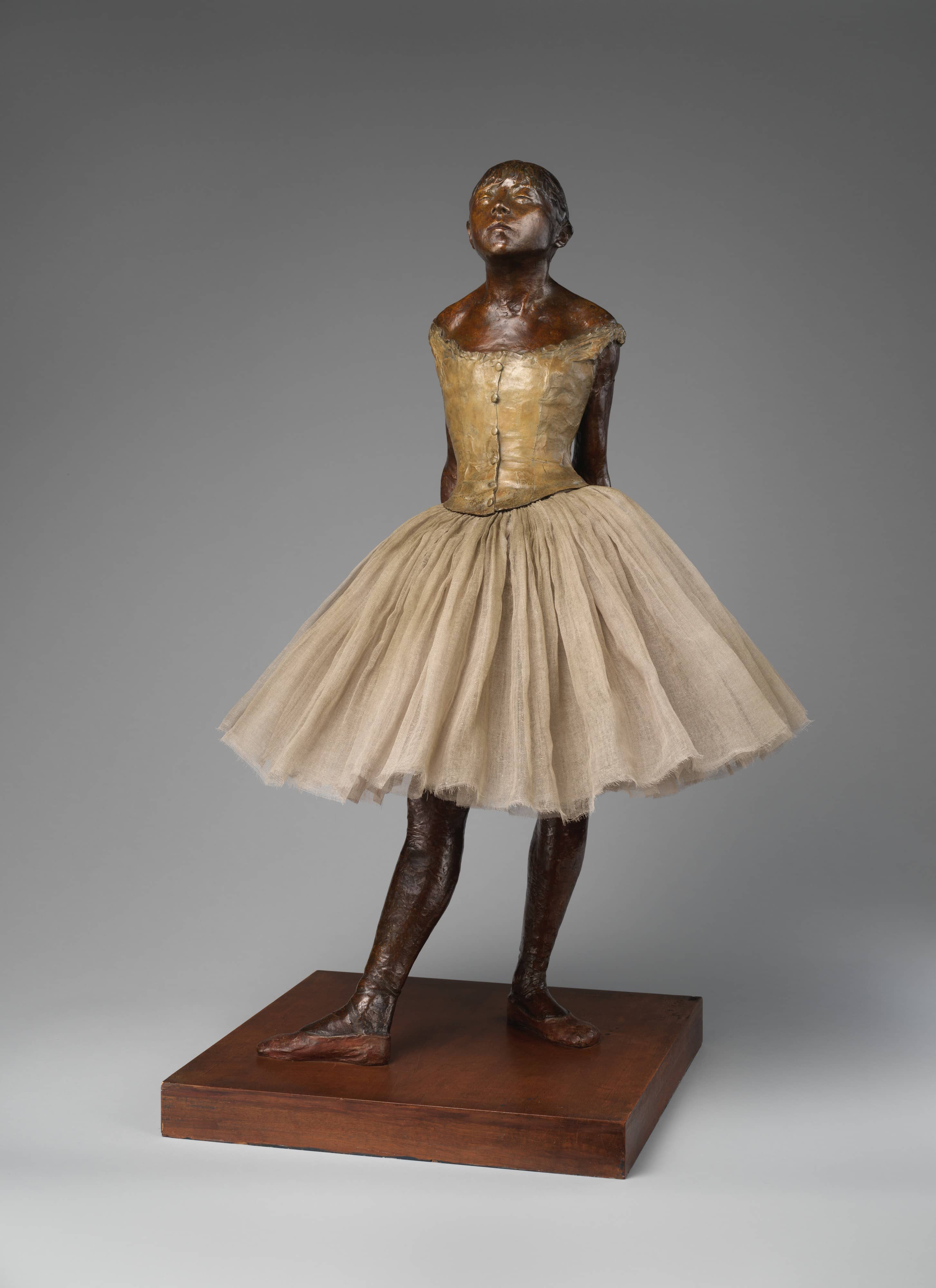
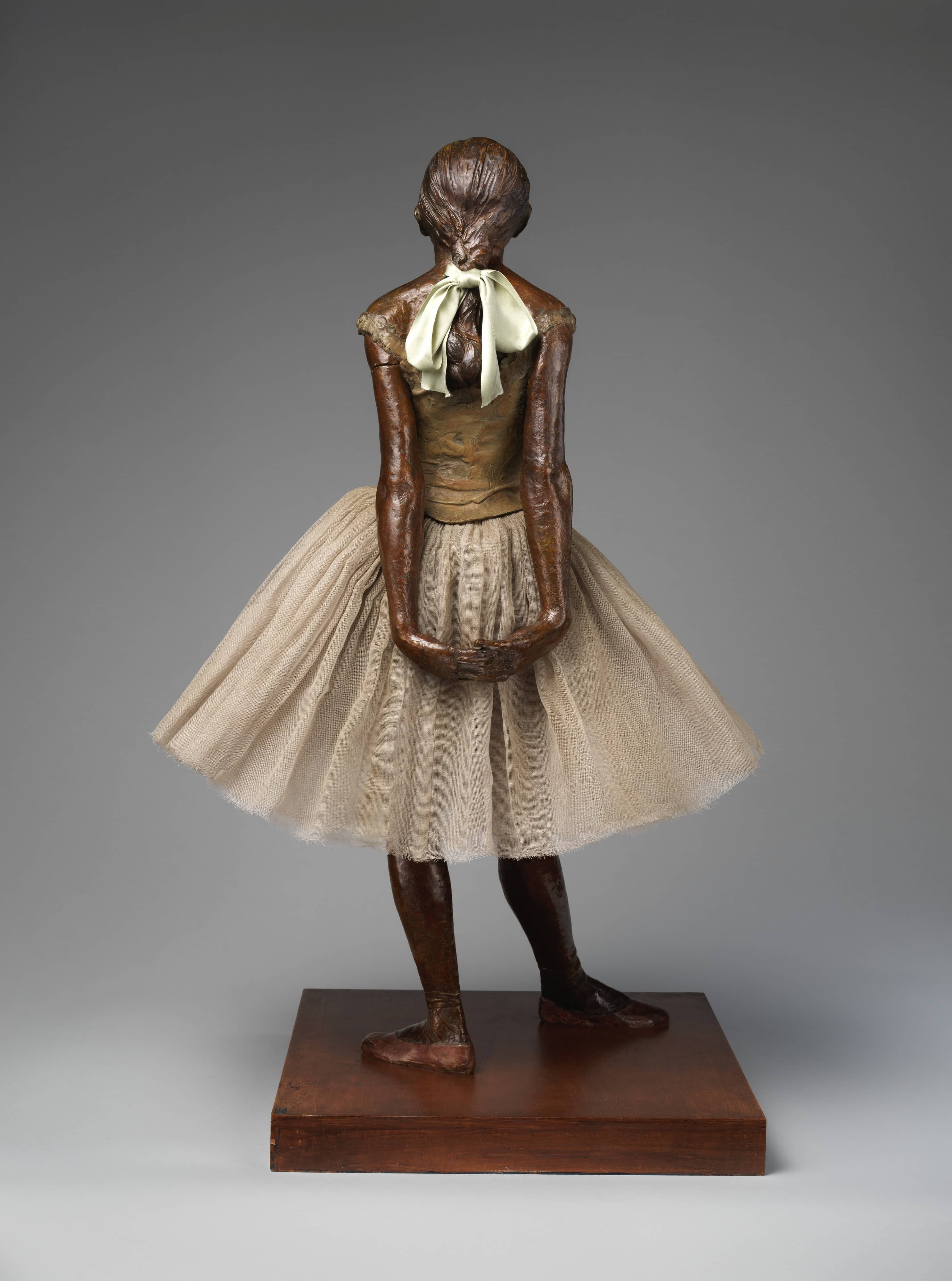
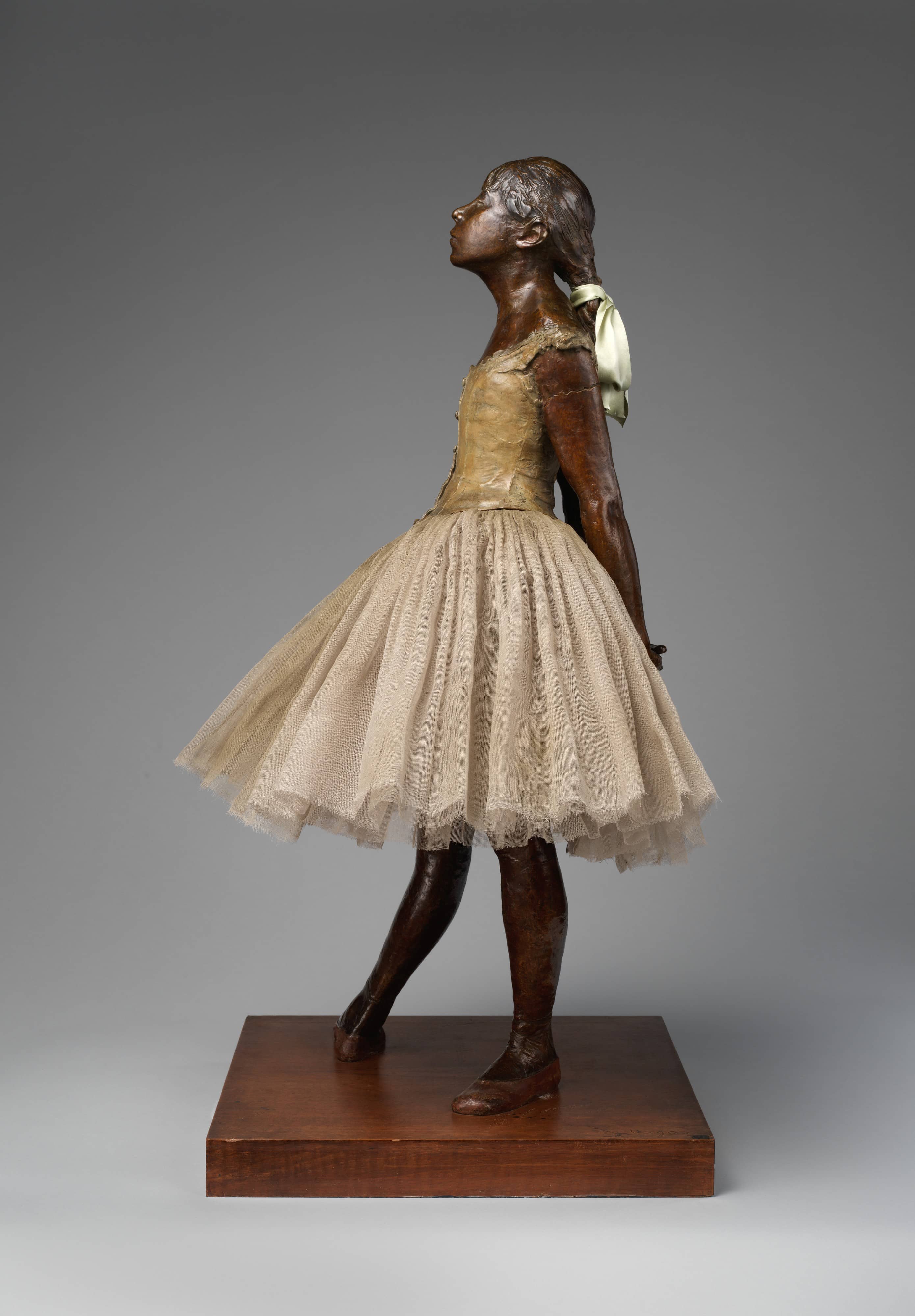
The Little Fourteen-Year-Old
Dancer Partially tinted bronze, cotton tarlatan, silk satin, and wood; 97.8 x 43.8 x 36.5 cm, by Edgar Degas, 1922 (cast) The Metropolitan Museum of Art, New York City |
||||||||||
|
|
||||||||||
| With no formal training in sculpture, Degas was nevertheless prolific in the field. He created numerous wax figures built around wire armatures. These figures, featuring dancers, bathers, and horses, mirrored themes explored in his paintings, but functioned as independent investigations of three-dimensional form, not preparatory steps for specific paintings. While Degas wasn't entirely secretive about his sculptures, sharing them with friends and even authorising bronze casts of a few during his lifetime, only the Little Fourteen-Year-Old Dancer received a public exhibition. Constructed from coloured wax and incorporating real fabric elements such as ribbon and tulle, this particular sculpture evoked comparisons to Madame Tussaud's wax museum in London due to its materials and display within a glass case. This association was further strengthened by its resemblance to mannequins displayed at a Parisian exposition. This sculpture was the largest that Degas had made. The cotton tutu and satin hair ribbon are not original, and were made in 2018. Edgar Degas selected a young ballet student, Marie van Goethem (born 1865), as the model for this work. By 1880, van Goethem had transitioned from the Paris Opera Ballet school to a professional dancer role. Degas' focus on her form is evident in his numerous sketches. A frequent visitor to the Opera, he tirelessly studied dancers in various positions. The bronze sculpture depicts van Goethem in a classic ballet pose, right leg extended and turned out. However, the pose is intentionally awkward, with her arms rigidly hanging behind her and head tilted back. Additionally, the adolescent's facial features lack conventional beauty. This unconventional approach results in a striking sculpture. |
||||||||||
 |
||||||||||