
|
|
|
|||||||||
 |
||||||||||
| John Constable (1776–1837) | ||||||||||
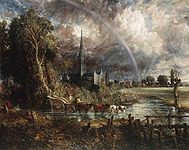
| A landscape painter, John Constable was born at East Bergholt, Suffolk. He became a pupil at the Royal Academy in 1799 and later studied under Joseph Farington and R. R. Reinagle. Initially painting portraits and historical subjects, he ultimately turned to landscape as his true calling, exhibiting his first picture in 1802. Despite this, he did not become a member of the Royal Academy until 1829, and during his lifetime he did not achieve great popularity in his native England. In France, however, he received early recognition and was among the most highly esteemed of British painters, particularly after his landscapes The Rainbow and Weymouth Bay were presented to the Louvre in 1873. His influence on the modern French school of landscape painting is undeniable and fully justifies his inclusion in the great national French collection. While many landscape painters can capture nature in her tranquil moods, as if she were a motionless model, few can, like Constable, convey the approach of a storm, the rising wind, or a rapidly changing sunset. In depicting clouds racing across the sky or brooding over treetops, he had no rival. His paintings are sometimes heavily loaded, and the foregrounds may show unevenness, yet their brilliance, tonal vigour, and faithful representation of transient effects more than compensate for these minor flaws. He died in London. | ||||||||||
| |
||||||||||


 |
||||||||||
|
|
||||||||||
| |
||||||||||
  |
||||||||||


 Art
Art