
|
|
|
|||||||||
 |
||||||||||
 |
||||||||||
 |
||||||||||
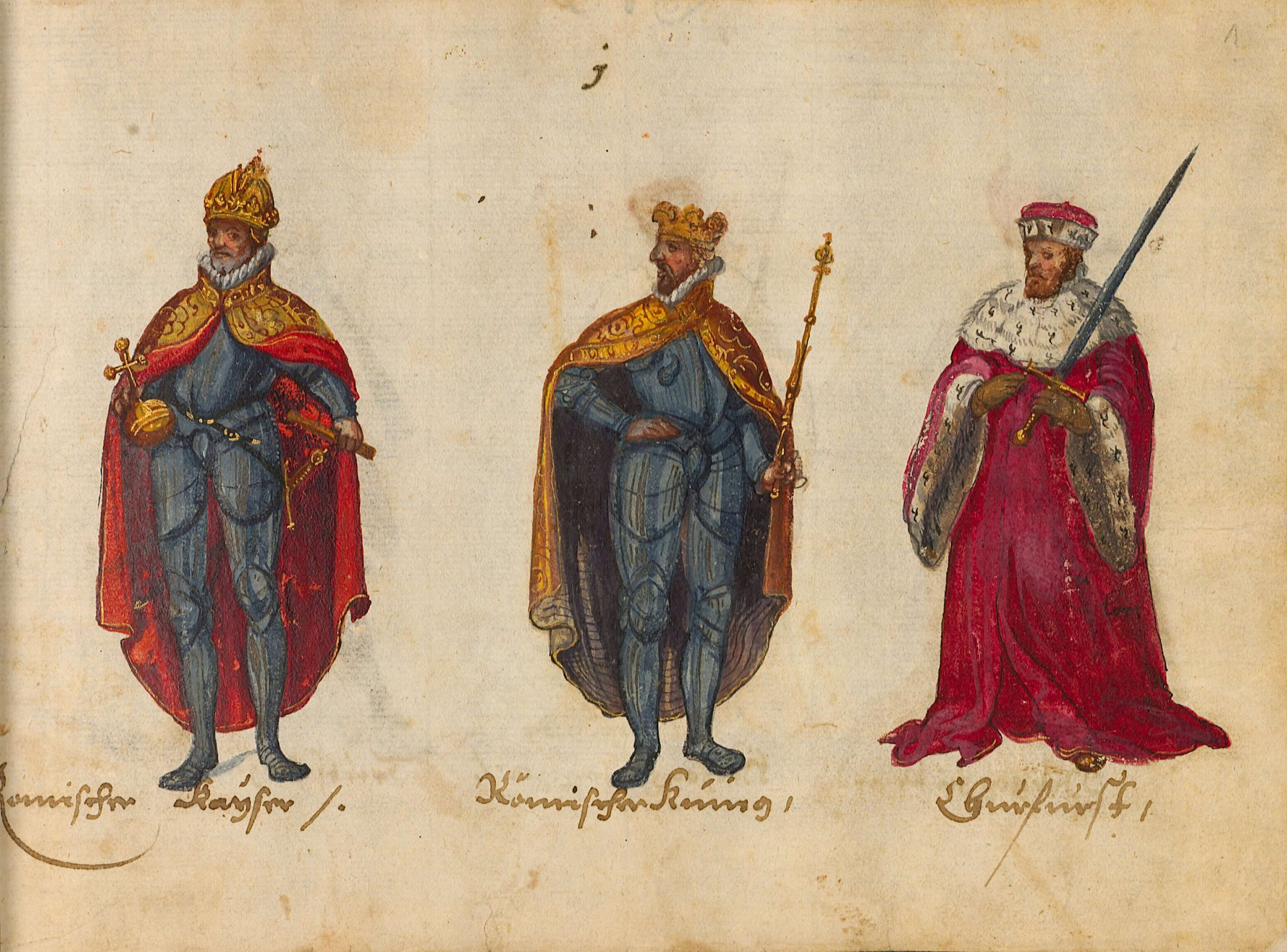
A European emperor and two kings Ink and watercolour on paper, 14.5 x 20 cm, anonymous, 1560–70 Bayerische Staatsbibliothek, Munich |
||||||||||
| From the manuscript Costumes and Genre Pictures of the 16th Century from Western and Eastern Europe, the Orient, the Americas, and Africa, probably published in Augsburg. The first figure on the left, an emperor, wears a golden crown adorned with intricate details and a rich red cape lined with gold embroidery. Beneath the cape, he is clad in a full suit of armour, indicating his martial prowess. In his hands, he holds a sceptre and an orb, both traditional symbols of imperial authority. The central figure also wears a crown, though it is slightly smaller and less ornate. His attire consists of a dark suit of armour, partially covered by a flowing, golden-embroidered cloak draped over one shoulder. He holds a long sceptre in his right hand, standing in a posture that exudes confidence and command. The third figure on the right is dressed in a grand red robe trimmed with ermine fur. He wears an ermine-fur trimmed hat rather than a traditional crown and holds a large sword in both hands, evoking a sense of power and tradition. |
||||||||||
 |
||||||||||


