
|
|
|
|||||||||
 |
||||||||||
|
Costumes
and Genre Scenes from the Sixteenth Century: Women of Italy, France, England, and the Low Countries |
||||||||||
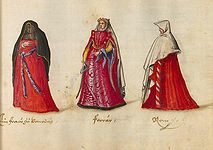
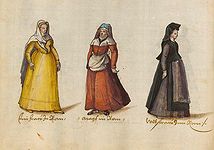
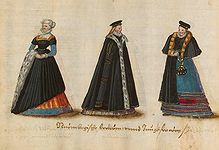
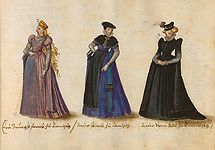
| Women in Italy, France, England, and the Low Countries exhibited distinct yet sometimes overlapping styles of dress in the sixteenth century. In Italy, particularly in Venice and Florence, fashion was characterised by luxurious fabrics such as velvet, silk, and brocade, with elaborate embroidery and bright colours. Italian women, especially of the elite class, wore flowing gowns with intricate patterns, often accessorised with fine jewellery and headdresses that reflected their social status. For those of lower social status, clothing was simpler, often made from wool or linen, and designed for practicality rather than ornamentation. In France, the courtly fashion was similarly opulent, with an emphasis on voluminous skirts, fitted bodices, and extravagant collars. French women’s attire also highlighted their wealth and position, with elaborate gowns and extravagant accessories becoming symbols of royal and noble identity. For women of less privileged background, dresses were more modest and constructed from more affordable fabrics, though still reflecting the era's focus on modesty and respectability. In England, the styles became more restrained, with long, elegant gowns, high collars, and the use of fur, particularly in colder climates. English fashion, under the influence of Queen Elizabeth I, also saw the rise of detailed ruffs and layers of fabric, which signified not only wealth but a connection to the royal court. Women of the lower classes wore simpler versions of these fashions, often with less adornment. In the Low Countries, women’s fashion reflected both the cultural influences of nearby France and Italy, as well as regional traditions. They often wore dresses with wide skirts, sometimes supported by petticoats or farthingales, and adorned with fine lace, ribbons, and embroidery. Women of higher social standing wore garments made from luxurious fabrics, while those of modest backgrounds opted for more modest and practical clothing. Despite these regional differences, a shared sense of opulence, modesty, and social distinction permeated the fashion of women in these countries during the sixteenth century. | ||||||||||
| |
||||||||||










 |
||||||||||
|
|
||||||||||
| |
||||||||||
 |
||||||||||


