
|
|
|
|||||||||
 |
||||||||||
| Antonio Canova (1757–1822) | ||||||||||
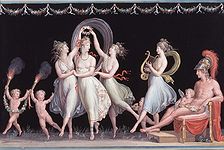
| One of the greatest Italian sculptors, Antonio Canova was born in Possagno, in the province of Treviso. He was initially educated by his grandfather, a stone-cutter, and later studied under the sculptor Torretto in Bassano, where he worked for two years. After another year of study with Torretto's nephew in Venice, he spent the next four years pursuing independent efforts. At the age of sixteen, Canova modelled his first statue, Eurydice; three years later, he produced Orpheus. In 1780, he moved to Rome to continue his studies in antiquities. Following the completion of Theseus and the Minotaur in 1782, he went on to produce numerous works. In 1815, Canova was sent to Paris as the pope's envoy to negotiate the return of art treasures taken from Italy by Napoleon, a mission that was successful. Canova was also a painter, primarily focusing on portraits and mythological subjects. His main glory lies in his classical works; although he did not entirely escape the affectation and artificiality of his time, his finest sculptures are noble in conception and form, full of grace, tranquillity, beauty, and elegance. He elevated sculpture from the low condition to which it had fallen in the seventeenth and eighteenth centuries. His finish was particularly soft and velvet-like, with the flesh of his figures taking on a delicate bloom. An indefatigable worker, he used the wealth that flowed in upon him to support charitable causes, especially the advancement of young artists. He died in Venice. | ||||||||||
| |
||||||||||

 |
||||||||||
|
|
||||||||||
| |
||||||||||
  |
||||||||||


 Art
Art