
|
|
|
|||||||||
 |
||||||||||
| Julia Margaret Cameron (1815–1879) | ||||||||||
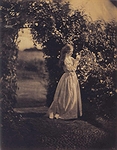
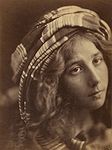
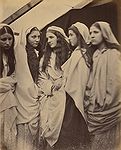
| Born Julia Margaret Pattle in Calcutta, India, Cameron took up photography in 1863 as a hobby. With no formal training in the medium, she developed her own approach through experimentation, personal inclination, and trial and error. By 1864, she began exhibiting her work, and over the course of ten years produced more than 900 photographs, which were mass-produced and in high demand. Exhibitions in Europe earned her a bronze medal in Berlin in 1865 and a gold medal in 1866. Her distinctive style often combines close-up and abstract elements with harsh lighting. Some of her works use allegory, while others depict historical or mythological figures. She also produced portraits of famous contemporaries and members of her own family. A further group consists of portraits of real women without props or costumes, each presented with a strong sense of personality and executed with sensitivity and delicacy. Cameron was criticised for not removing blemishes from her images, and her signature soft focus was often dismissed as incompetence with the camera. However, she did receive guidance from Sir John Herschel. Her style was influenced by the old masters such as Titian, Raphael, and Rembrandt, as well as the Pre-Raphaelites. | ||||||||||
| |
||||||||||

 |
||||||||||
|
|
||||||||||
| |
||||||||||
  |
||||||||||


