
|
|
|
|||||||||
 |
||||||||||
 |
||||||||||
 |
||||||||||
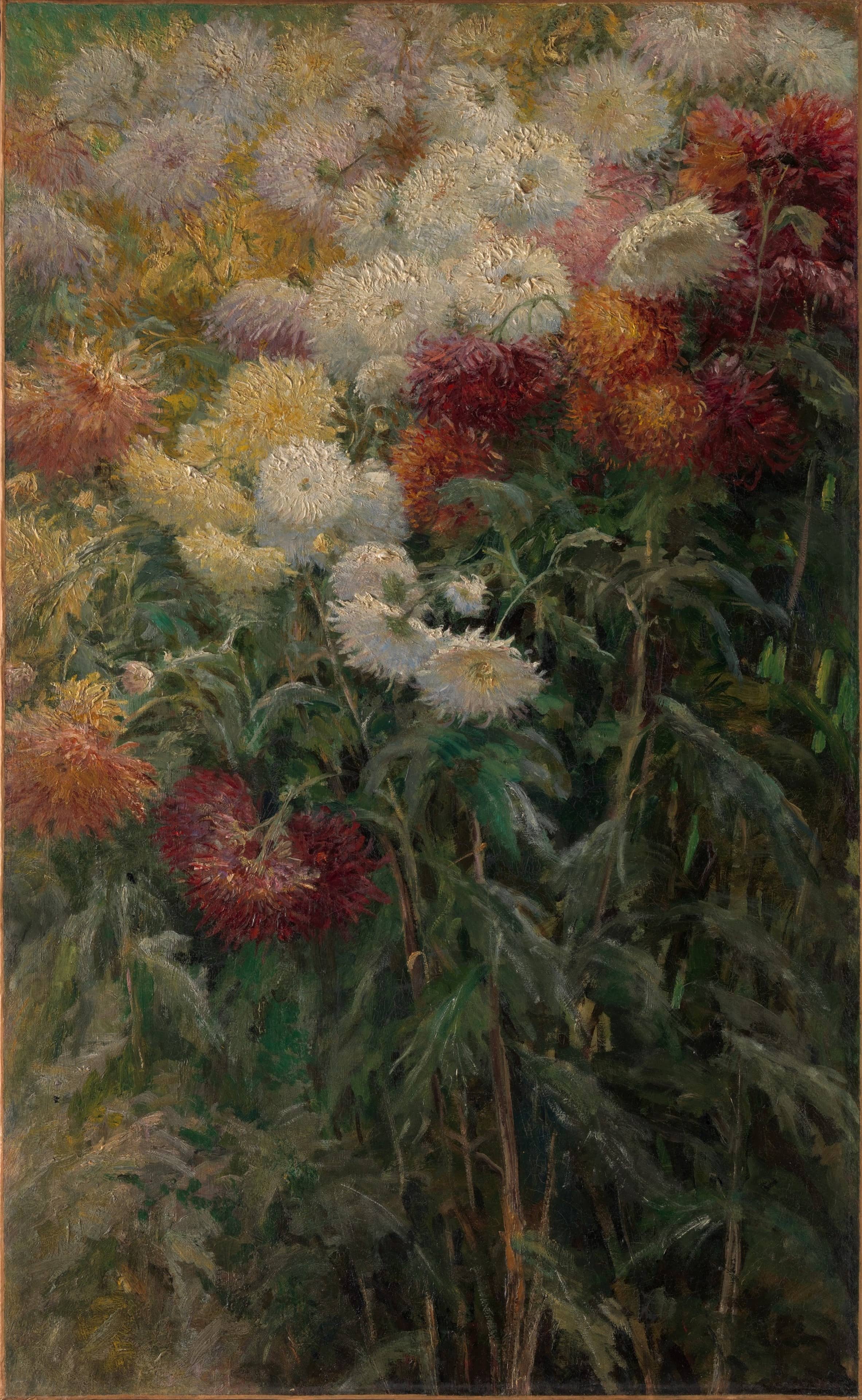
Chrysanthemums in the Garden at Petit-Gennevilliers Oil on canvas, 99.4 × 61.6 cm, by Gustave Caillebotte, 1893 The Metropolitan Museum of Art, New York |
||||||||||
| Though Gustave Caillebotte was passionate about gardening throughout his life, it wasn’t until the 1880s that flowers became a significant focus in his art. By this time, he had settled in Petit-Gennevilliers, a quiet town along the Seine just northwest of Paris, where he cultivated an extensive garden. This painting portrays chrysanthemums, a flower highly fashionable in France and admired for its vivid colours and connection to East Asian art, which greatly influenced European aesthetics. The tight, immersive framing creates a sense of abundance, enveloping the viewer in a sea of blossoms. This approach has been linked to Caillebotte’s vision for his dining room doors, which he intended to decorate with plant motifs—a concept reminiscent of his friend Claude Monet’s floral series inspired by his own garden at Giverny. Through this work, Caillebotte merges horticulture with art, embracing an Impressionist style while exploring the decorative possibilities of botanical imagery. |
||||||||||
 |
||||||||||


