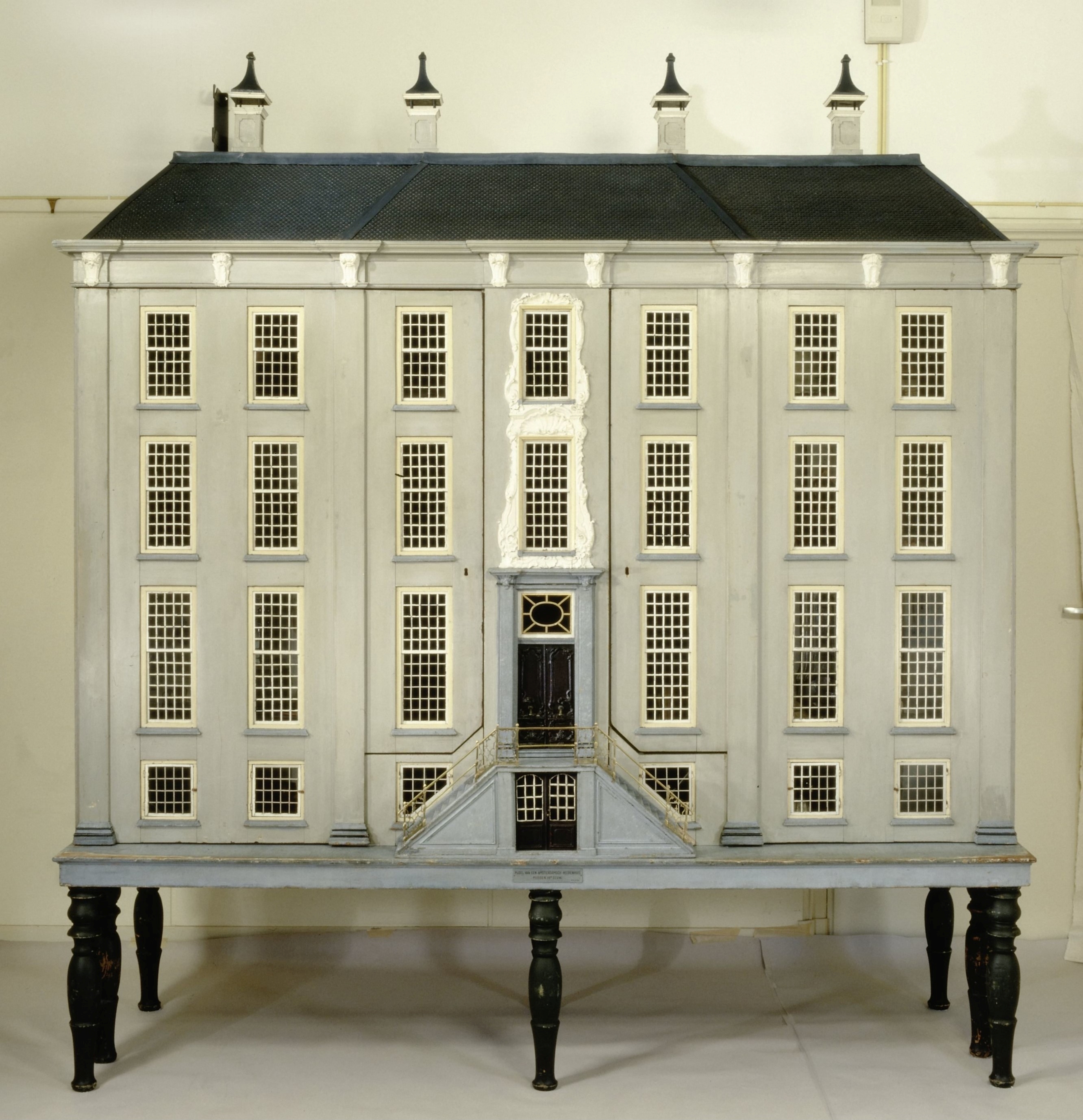
Evoking the elegance and
order of an affluent 18th-century Dutch household, this finely
constructed doll’s house reflects the architectural logic and social
ideals of its time. Complete with a central vertical buttress,
raised pavement, and a hipped roof topped with four chimneys, it
features a cream and grey removable façade marked by symmetrical
rows of white-trimmed windows, a central staircase, and a black door
framed by carved detailing—clearly inspired by canal-side
residences. Elevated on turned black legs and topped with a steep
roof, the house opens to reveal a multi-level interior: cellars and
a kitchen in the basement; halls, a staircase, and a dining room on
the main floor; living quarters, including a bedroom and children’s
room, above; and storage spaces tucked into the attic. Far from
being a toy, this object functioned as a display piece for a
well-to-do lady, serving as a miniature theatre of domestic
management and refinement. Through its precise craftsmanship and
structured layout, it offers a distilled vision of order, taste, and
aspirational household life in the Dutch Republic.