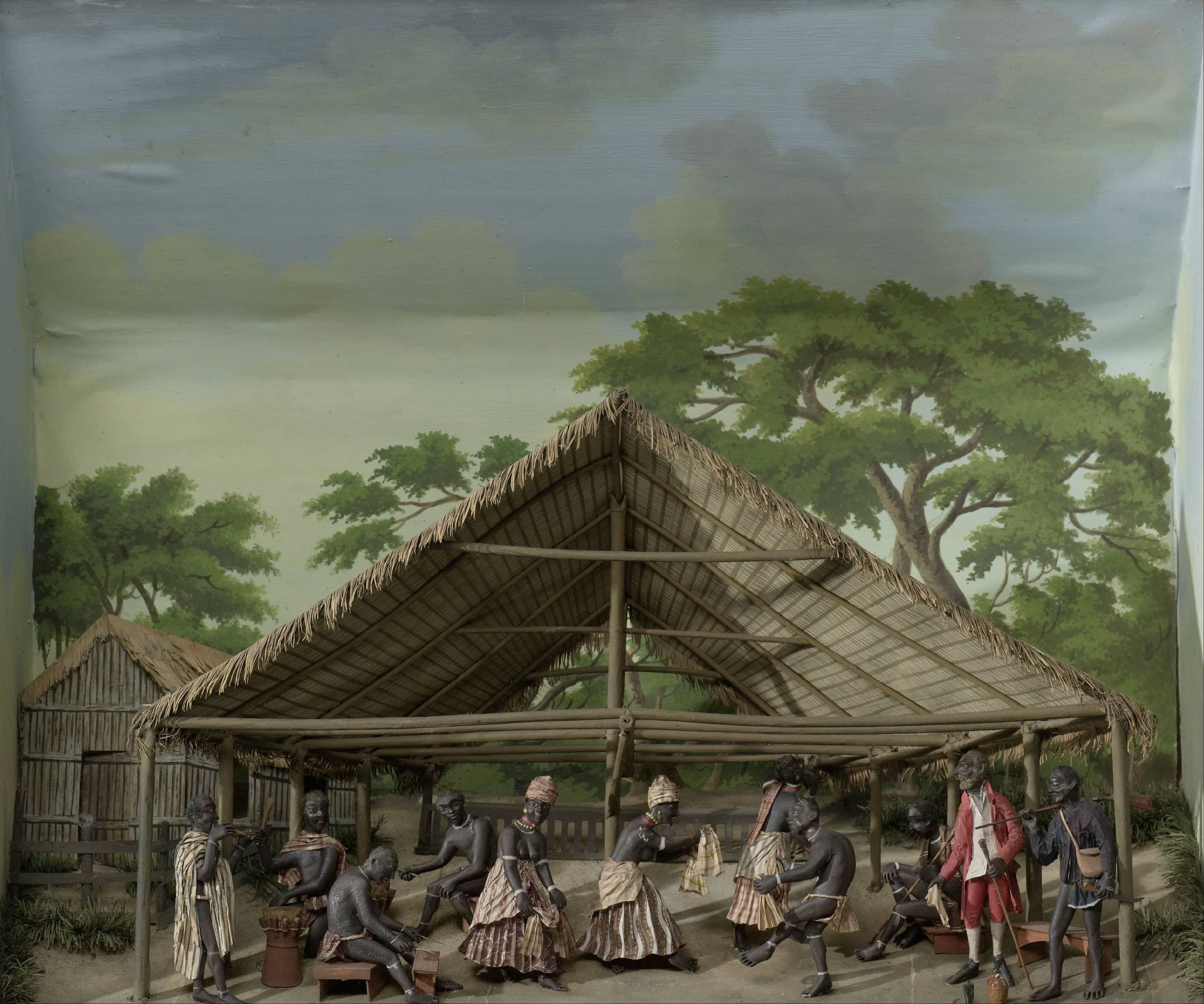
The diorama captures a
du celebration—an event held by enslaved communities in Suriname,
often several times a year and deeply valued as both performance and
social release, to such an extent that banning it could provoke
unrest or work stoppages. Schouten constructed these detailed scenes
using local materials, sometimes incorporating imported crate wood,
and this particular piece may have travelled directly to France,
where it was fitted with a contemporaneous frame in the 1830s. The
central structure features an open-sided thatched hut alive with
dancing figures, led by the afrankeer, a respected narrator and
symbolic figure within the du, flanked by musicians and elaborately
dressed dancers. To the far right stands a man in red, likely
depicting an authority figure or 'king', dressed in Dutch-provided
garments, beside a hunter armed with traditional weapons, marking
the layered hierarchy within this plantation setting.