
|
|
|
|||||||||
 |
||||||||||
 |
||||||||||
 |
||||||||||
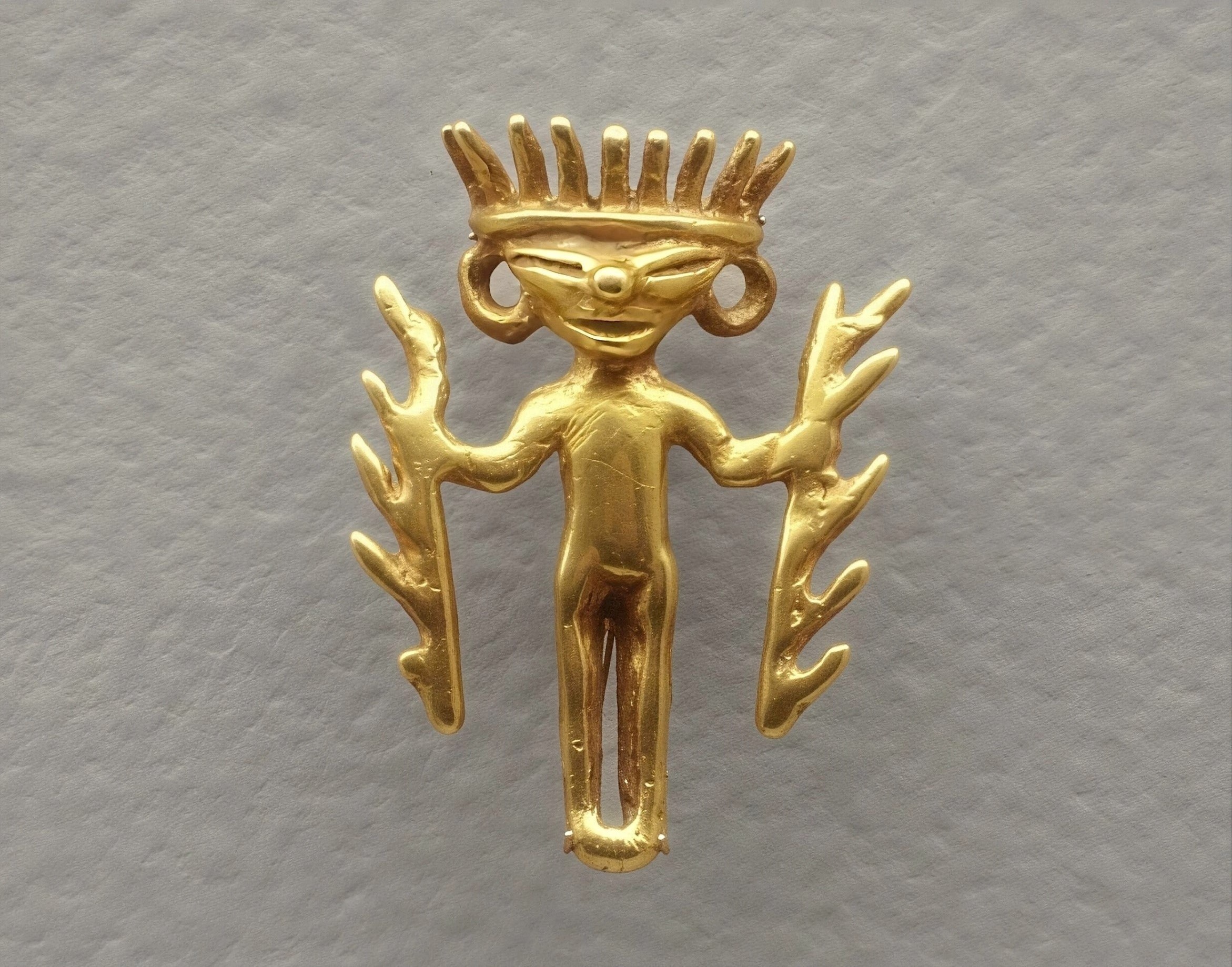
Votive Figure Gold, Muisca culture, 600–1600 Museo del Oro, Bogotá |
||||||||||
| The Muisca people of Colombia produced small votive figures known as tunjos. The name, derived from the Muysccubun language and later adopted into Spanish accounts, was often used to describe idols or ritual offerings. These figures were typically fashioned from gold or tumbaga, a copper, silver and gold alloy, and took many forms: human beings, which were the most frequent, animals, and everyday objects such as weapons. Tunjos held deep religious significance. They were deposited in sacred places, including temples, caves, rivers and lakes, as acts of devotion and as a way to communicate with deities. Many of these figures reflect real aspects of Muisca life, portraying individuals and activities. This example has been interpreted as a shaman shaking branches, a gesture likely intended to invoke protection or divine favour. |
||||||||||
 |
||||||||||


