
|
|
|
|||||||||
 |
||||||||||
 |
||||||||||
 |
||||||||||
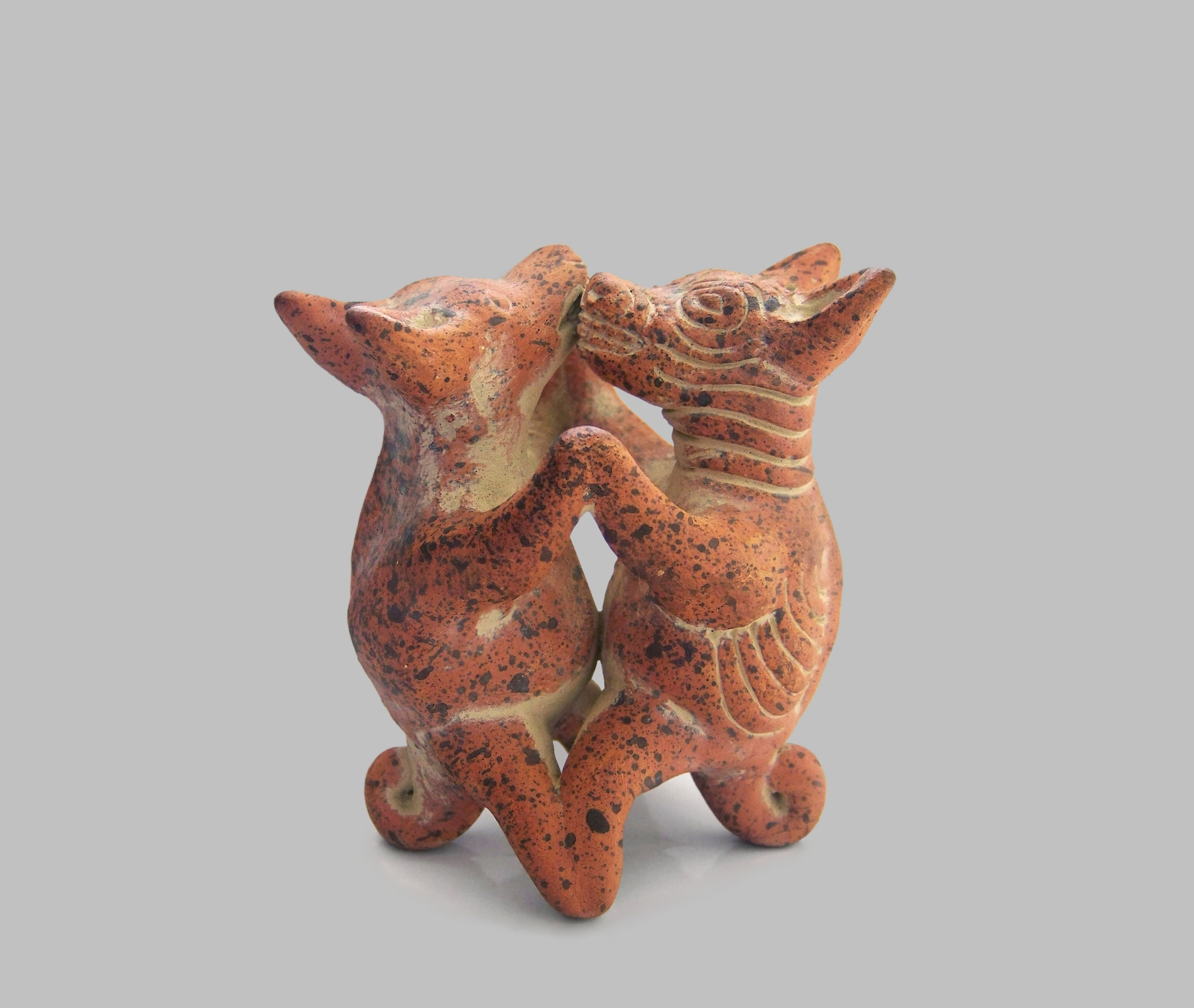
Colima 'Dancing'
Dogs Terracotta exemplar, 20th century Private collection |
||||||||||
| Ceramics from pre-Columbian cultures of western Mexico feature a surprising abundance of canine companions, and have been found in various archaeological contexts, the oldest example being from the Middle Preclassic period (1000–300 BC). These dogs range from realistic portrayals to more symbolic forms, and are particularly prevalent in the Colima region. Archaeological investigations point towards a profound significance for many of these effigies. Found within shaft tombs, the Colima dogs likely served a funerary purpose. Theories suggest they symbolised companions or guides for the deceased as they traversed the afterlife. Their presence may have offered comfort, protection, and potentially even a symbolic source of sustenance during this spiritual journey. In other cases, these figures incorporated a spout on the tail, head, or back, transforming them into functional containers. Overwhelmingly, these ceramics depict the Xoloitzcuintle, a cheerful, and hairless breed, appreciated by ancient man, and with a lasting presence in Mexican culture. They are found in various poses, but the most curious is the version nicknamed 'the dancing dogs' due to their lively and dynamic pose that resembles dancing or moving energetically. Research indicates that this pose symbolises the transmission of knowledge and wisdom from an old dog to a young one, rather than a literal dance. |
||||||||||
 |
||||||||||


