
|
|
|
|||||||||
 |
||||||||||
 |
||||||||||
 |
||||||||||
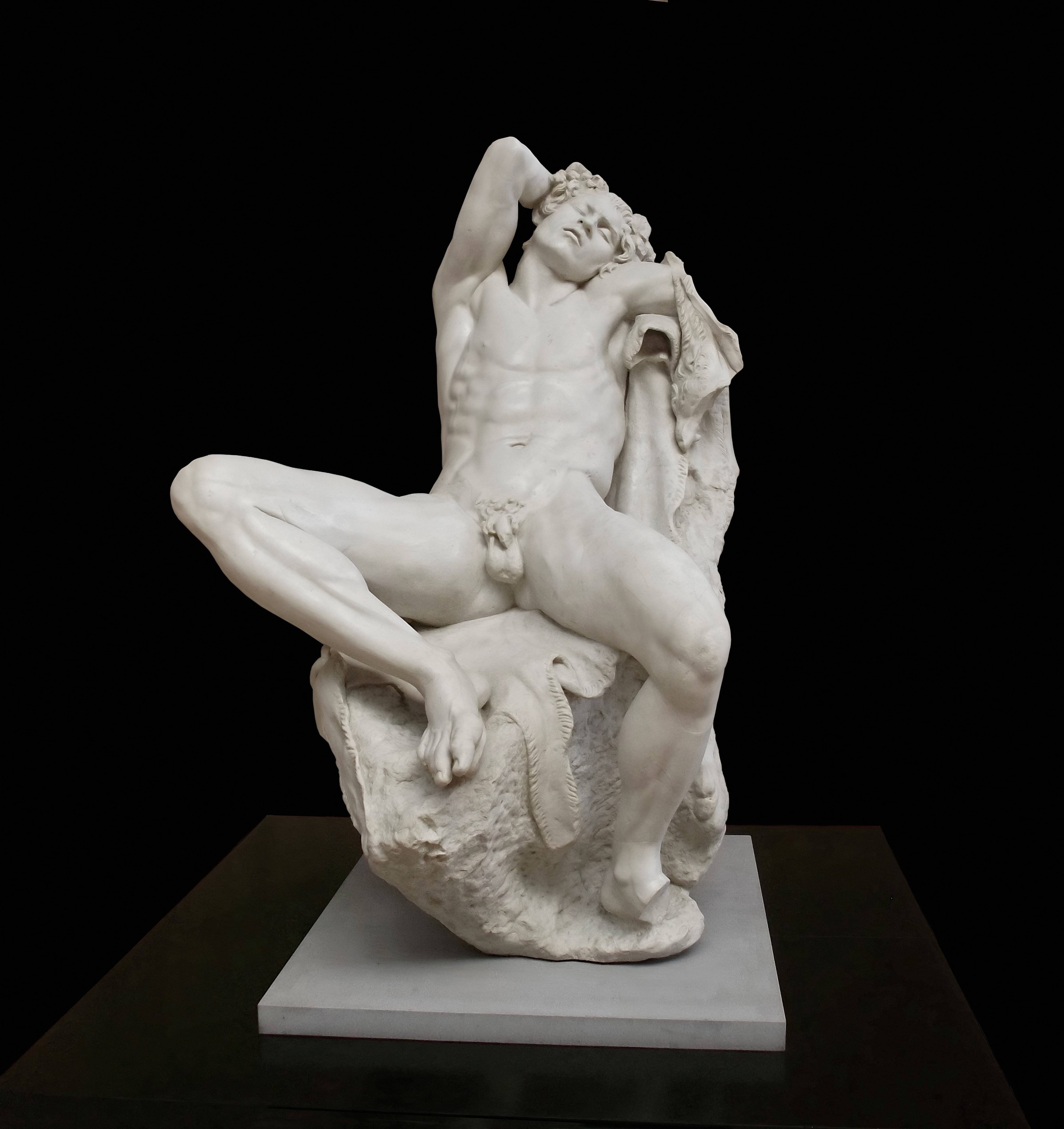
Barberini Faun Marble, Pergamene school, 2nd-3rd century BC Glyptothek, Munich |
||||||||||
| Unearthed near Castel Sant'Angelo in Rome in the 1620s, this life-sized marble statue dates from the Hellenistic period, though some scholars suggest it may be a Roman reproduction of a lost Greek work. It depicts a satyr reclining with an air of abandon, his legs sprawled and head tilted back, evoking a sense of intoxication and exhaustion. The finely carved details highlight his muscular build and the looseness of his posture. A draped cloth partially covers the rock beneath him, adding texture and contrast against the smooth, polished surface of his body. While satyrs are usually shown as energetic and mischievous, this figure captures an unusual moment of repose. Its naturalistic rendering, expressive composition, and sensuality reflect the Hellenistic emphasis on realism and emotional depth. The satyr’s relaxed sprawl conveys a sense of vulnerability, while the skilful carving of his tousled hair and anatomy enhances its lifelike quality. The statue underwent extensive restoration in the 17th century, particularly in 1679, when Giuseppe Giorgetti and Lorenzo Ottoni reconstructed missing parts, including the right leg, sections of the hands, and portions of the head. These restorations have influenced its present appearance, but the sculptor responsible for the original work remains unidentified. The statue takes its name from the Barberini family, who owned it in the 17th century. |
||||||||||
 |
||||||||||


