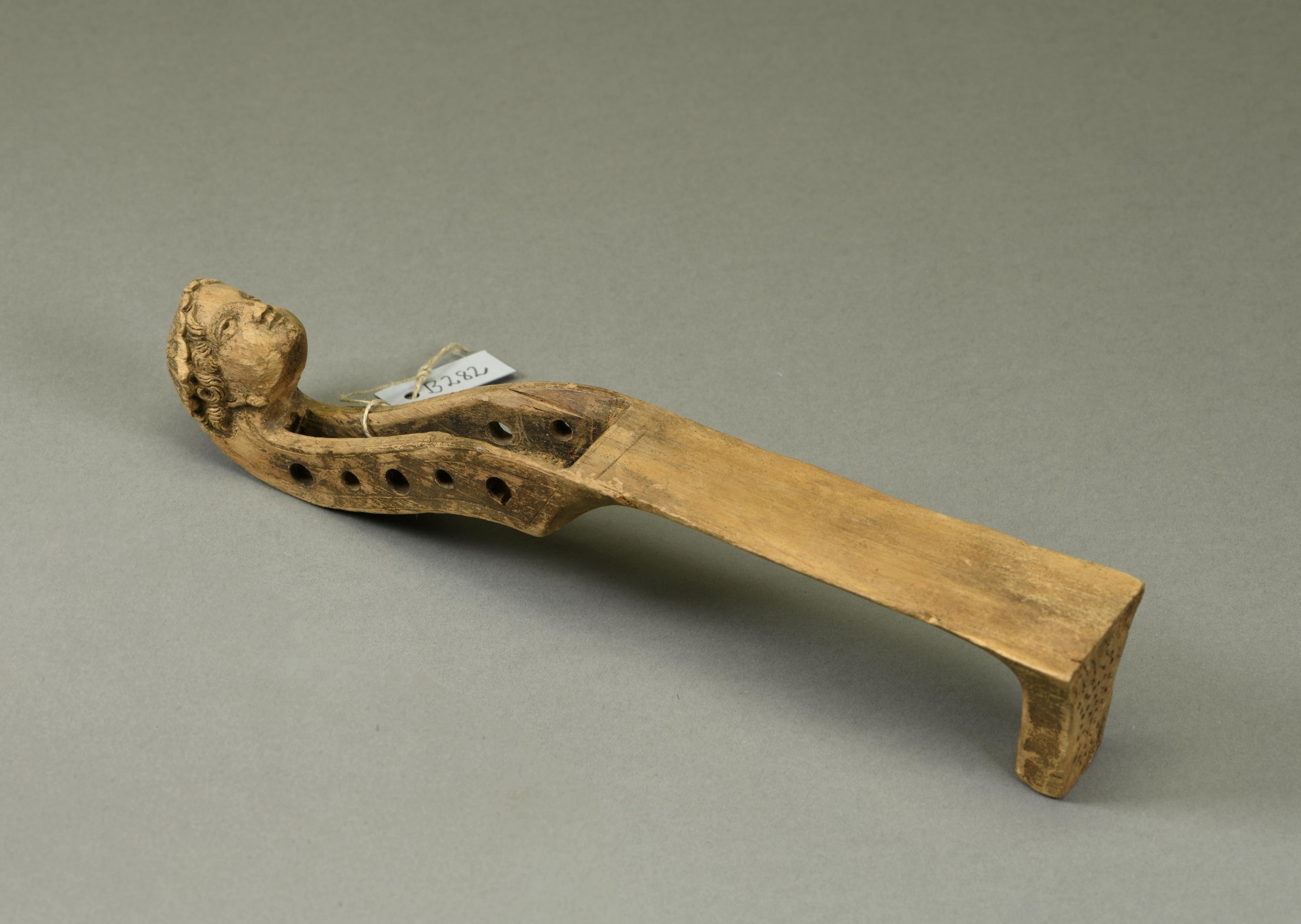
This piece from a viola
da gamba reflects the stylistic conventions of the late Baroque
period, where functional elements of musical instruments were often
enriched with decorative detail. The scroll terminates in a sculpted
human head, whose stylised features and balanced proportions reflect
both aesthetic intention and symbolic function, firmly situated
within the tradition of ornamentation common in continental European
stringed instruments of the time. The row of tuning holes along the
curved shaft served the practical purpose of securing tuning pegs,
while the flattened surface above indicates the area where the hand
would rest during performance, its smoothness attesting to prolonged
use.