
|
|
|
|||||||||
 |
||||||||||
 |
||||||||||
 |
||||||||||
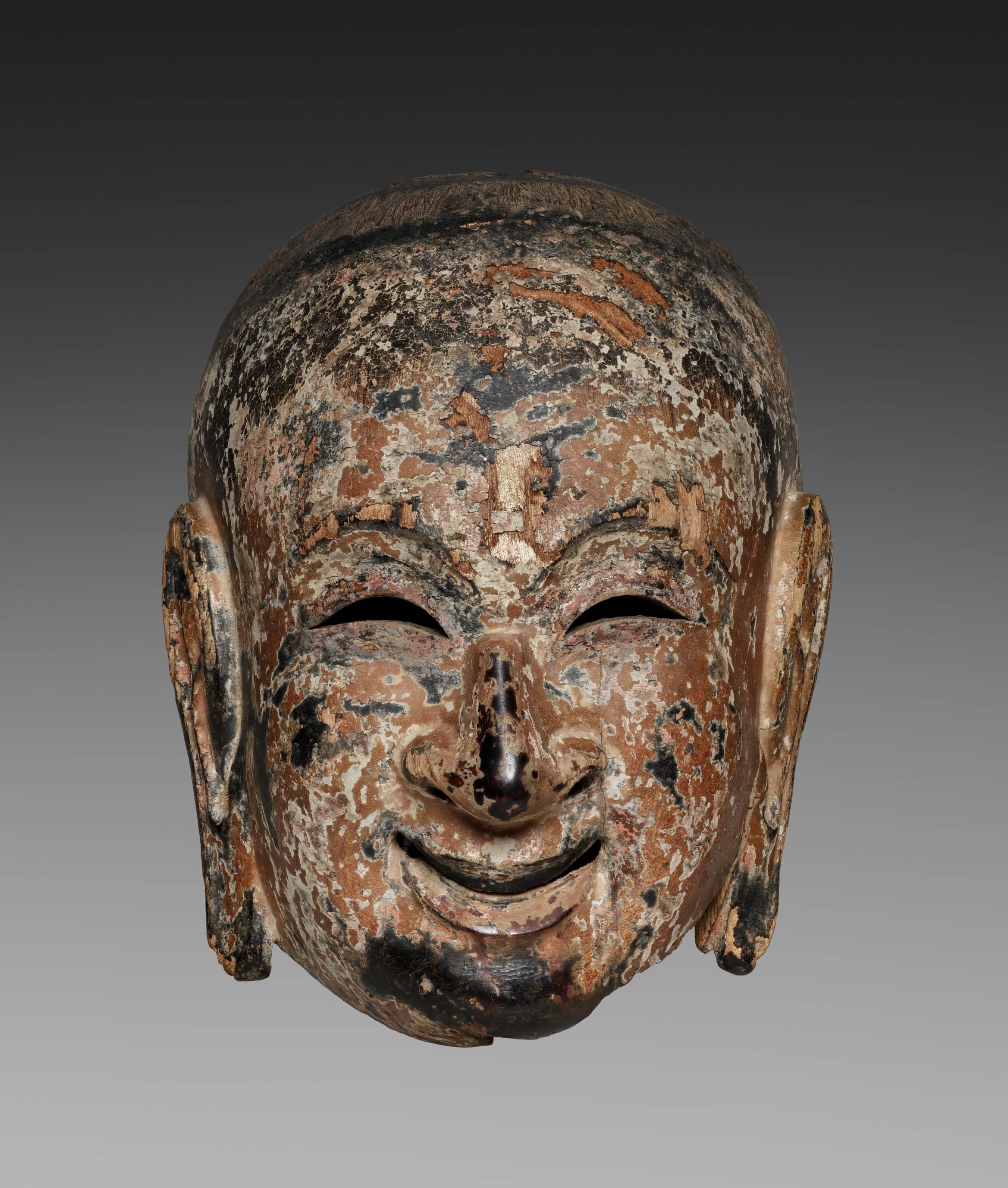
Gigaku Mask of Young
Persian Boy Wood, lacquer and paint, 28 x 21 x 18.5 cm, Japanese, Nara period (710–94) Cleveland Museum of Art |
||||||||||
| In gigaku, the seventh-century dance drama introduced to Japan from continental Asia, one character is the son of a Persian widower. His role is conveyed through ritualised gestures that echo prayers to the Buddha, combining non-Japanese narrative elements with Buddhist devotion. The mask made for this character encloses the actor’s entire head, allowing the performer to be absorbed into the role. Small openings at the eyes, nostrils, and mouth allow vision, breathing, and vocalisation while preserving the mask’s imposing presence. |
||||||||||
  |
||||||||||


