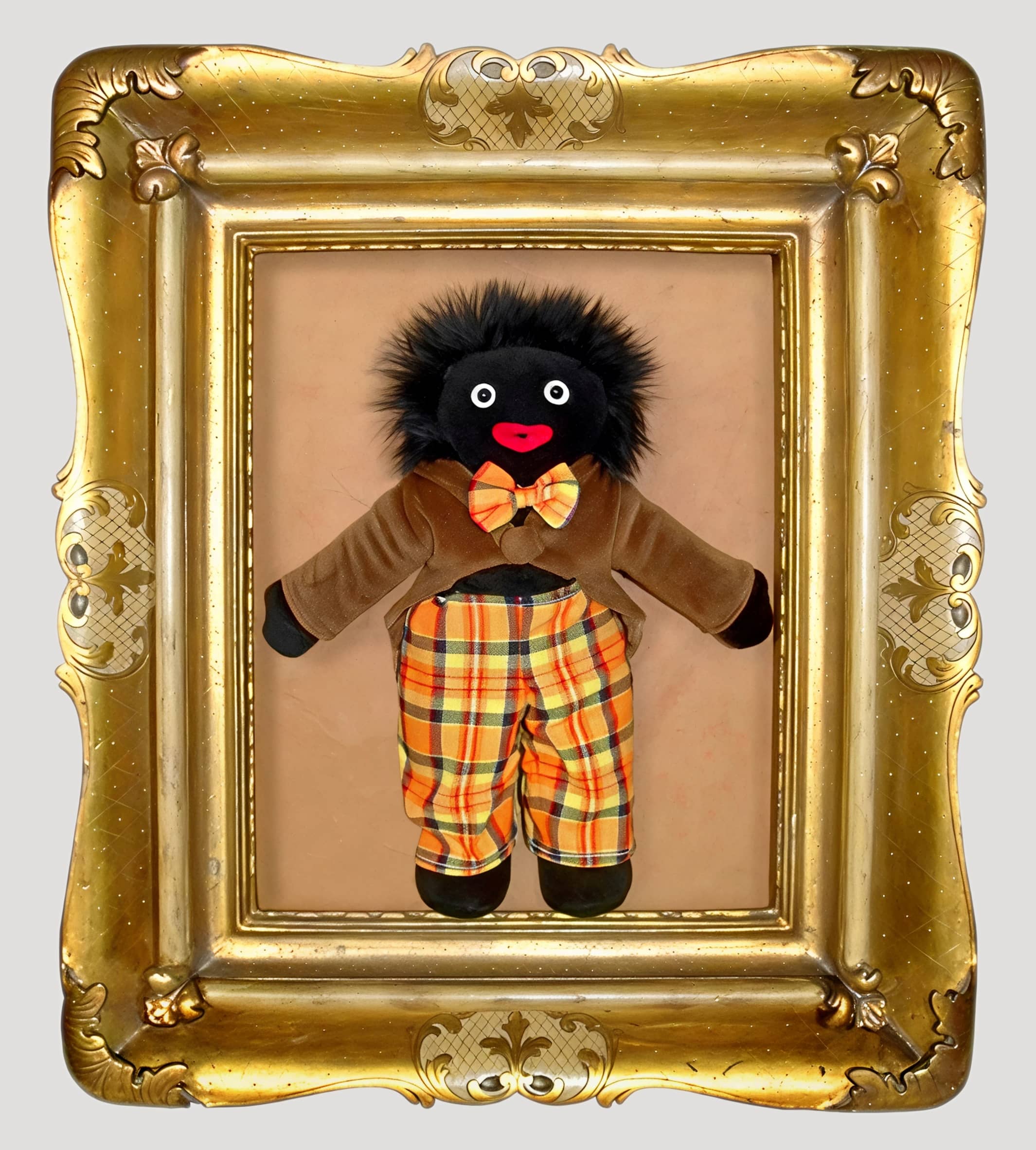
This composition adopts
the formal aesthetics of portraiture to enshrine a golliwog doll—an
object historically associated with colonial caricature and racial
stereotyping. Framed in ornate gilt, the figure is presented with a
sense of importance and reverence that deliberately contrasts with
its troubling origins. The work presents a pointed rebuke of racist
ideology and its idealisation, evoking Erasmus’s 1509 essay In
Praise of Folly, which, under the guise of humour, critiqued
human behaviour, moral blindness, and the elevation of harmful
ideas. In this context, folly is not naive or accidental; it is
intentional, visible, and socially affirmed. The golliwog becomes a
symbol not of past ignorance, but of enduring and conscious
allegiance to racist thought.