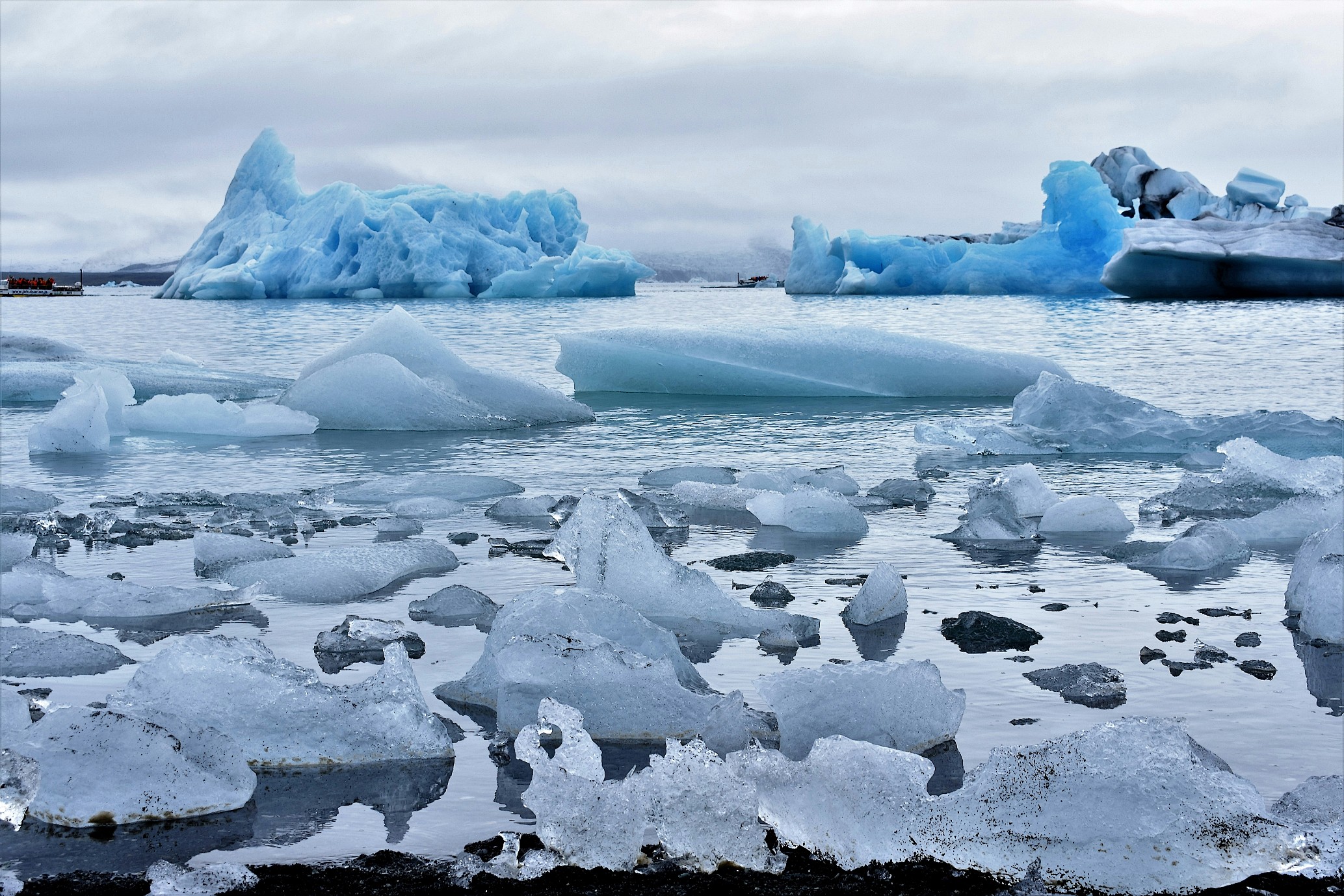
Located in the southeastern region of Iceland, Jökulsárlón is a
large glacial lagoon at the edge of the Vatnajökull glacier. The
lagoon forms from the melting ice of the glacier, which has receded
over time, creating a vast body of water filled with floating
icebergs. These icebergs break off from the glacier’s terminal edge
and drift across the lagoon before making their way to the Atlantic
Ocean. The ice varies in size and shape, with some pieces small and
fragmented, while others are large, towering formations. Vivid blue
tones in the ice result from the compression of air bubbles over
centuries, causing the ice to appear dense and blue. The surrounding
landscape features stark, barren terrain with volcanic ash deposits,
creating a dramatic contrast with the vibrant icebergs. A rugged,
mountainous backdrop, often covered in snow or ice depending on the
season, encircles the lagoon. As a significant site for both
scientific study and tourism, the area is known for its unique
combination of glacial activity, geology, and diverse wildlife,
including seals. The natural environment of Jökulsárlón is
constantly changing due to the ongoing movement and melting of the
glaciers, offering a continually evolving landscape.