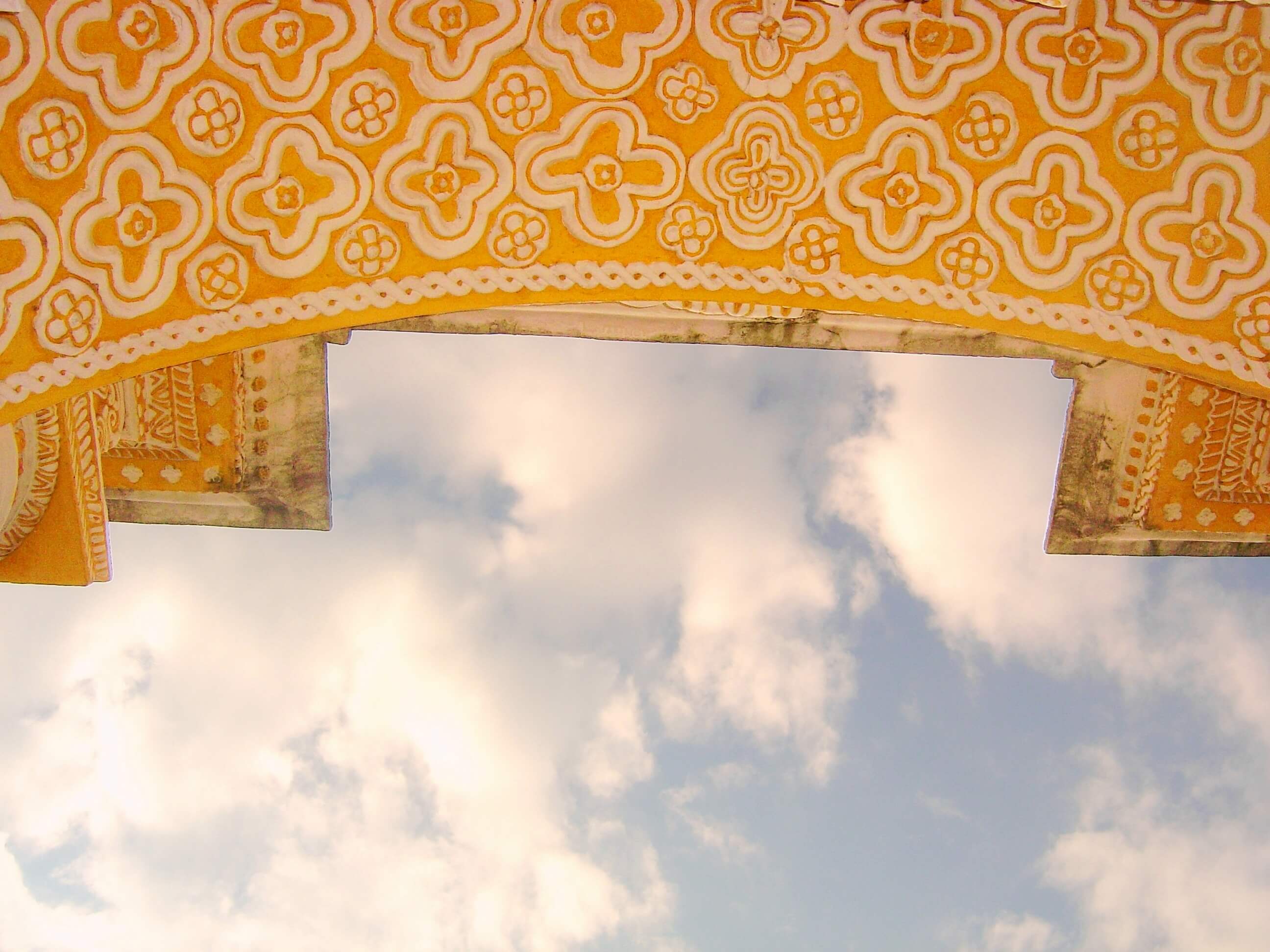
The Arch of Santa Catalina, built in 1693, was originally part of
the Santa Catalina convent in Antigua. One of the traditions of the
nuns of Santa Catalina was seclusion, and when the convent became
more prominent and its followers increased, it became necessary to
expand and occupy part of the block on the other side. The arch was
built primarily to allow the nuns to cross the street while maintaining
their seclusion. After the 1773 earthquake, the building was abandoned,
although the arch remained intact due to the strong construction of
its columns. The arch’s vibrant yellow colour, added during
a later restoration, combined with its intricate white detailing,
creates a striking contrast against the surrounding colonial buildings
and the towering Volcán de Agua. In 1843, a small tower with
a Lamy Amp Lacroix clock was installed, enhancing its prominence in
the city's skyline. In 1976, the clock was damaged by another earthquake
and was restored in 1991. The arch has since become a historic landmark
in Antigua, renowned for its well-preserved colonial architecture
and as a UNESCO World Heritage Site.