
|
|
|
|||||||||
 |
||||||||||
 |
||||||||||
 |
||||||||||
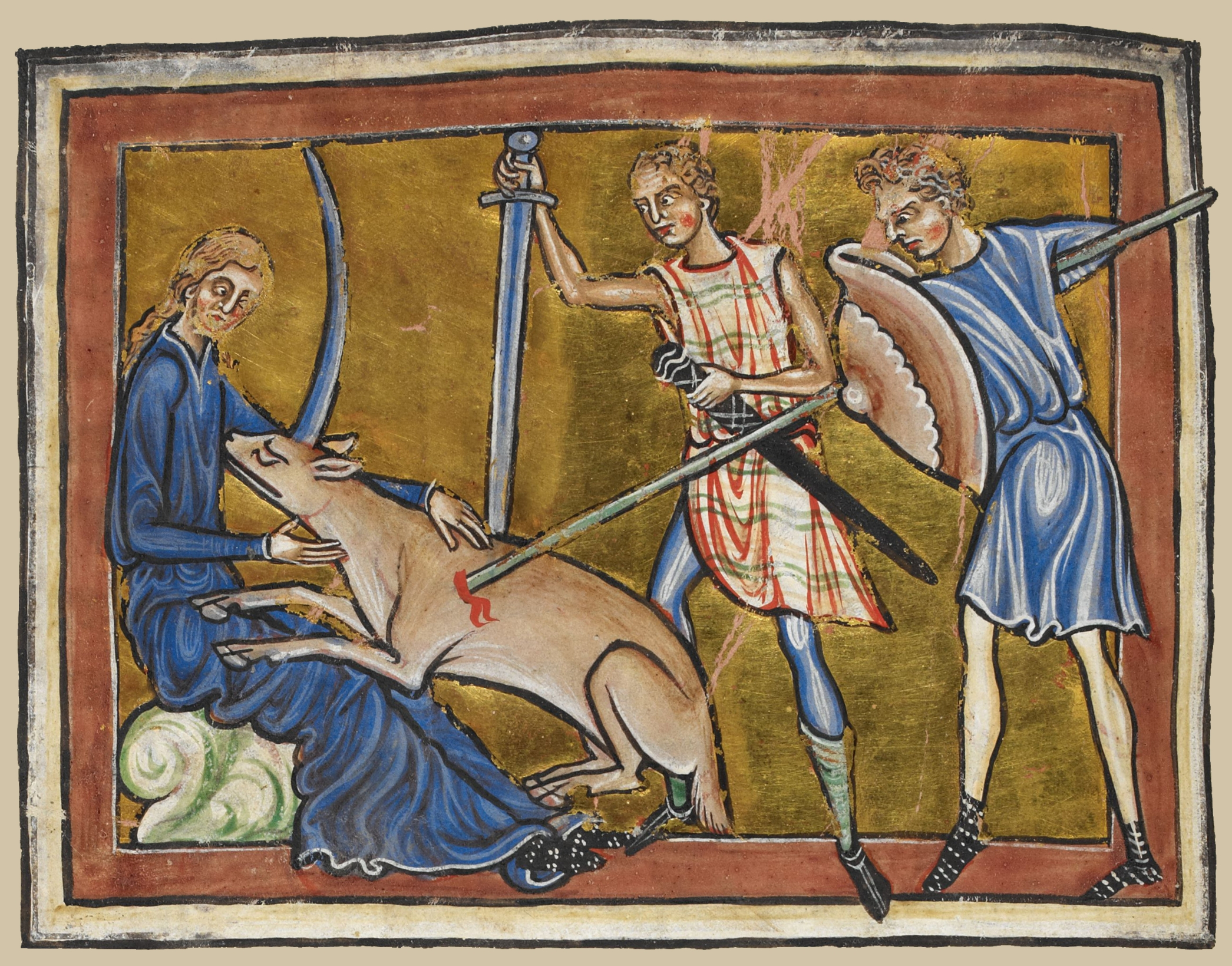
Men killing a unicorn as it lies in the lap of a virgin From the manuscript Royal 12 C XIX, f. 9v, 13th century The British Library, London |
||||||||||
| The scene of men killing a unicorn as it lies in the lap of a virgin, found in mediaeval manuscripts such as bestiaries, as in this case, carries layers of symbolic meaning rooted in religious and moral interpretation. In this depiction, the unicorn, long associated with purity, innocence, and at times Christ himself, is shown subdued by a virgin, the only figure said to be able to tame the wild creature. As the unicorn rests peacefully in her lap, hunters or knights strike it down, capturing the moment of its death. This violent act, set against the serenity of the virgin and the gentleness of the unicorn, was understood in mediaeval Europe as an allegory for betrayal and sacrifice. The virgin is often interpreted as representing the Virgin Mary, while the slain unicorn symbolises Christ, with the scene itself mirroring the Passion. The presence of this imagery in a bestiary adds further depth, as these books aimed to instruct readers in the virtues and vices through animal symbolism. The juxtaposition of innocence and brutality in this scene reflects a central theme in mediaeval thought: that purity and goodness are not exempt from suffering, and that the most virtuous can be subject to violence, corruption, and martyrdom in the earthly realm. |
||||||||||
 |
||||||||||


