
|
|
|
|||||||||
 |
||||||||||
 |
||||||||||
 |
||||||||||
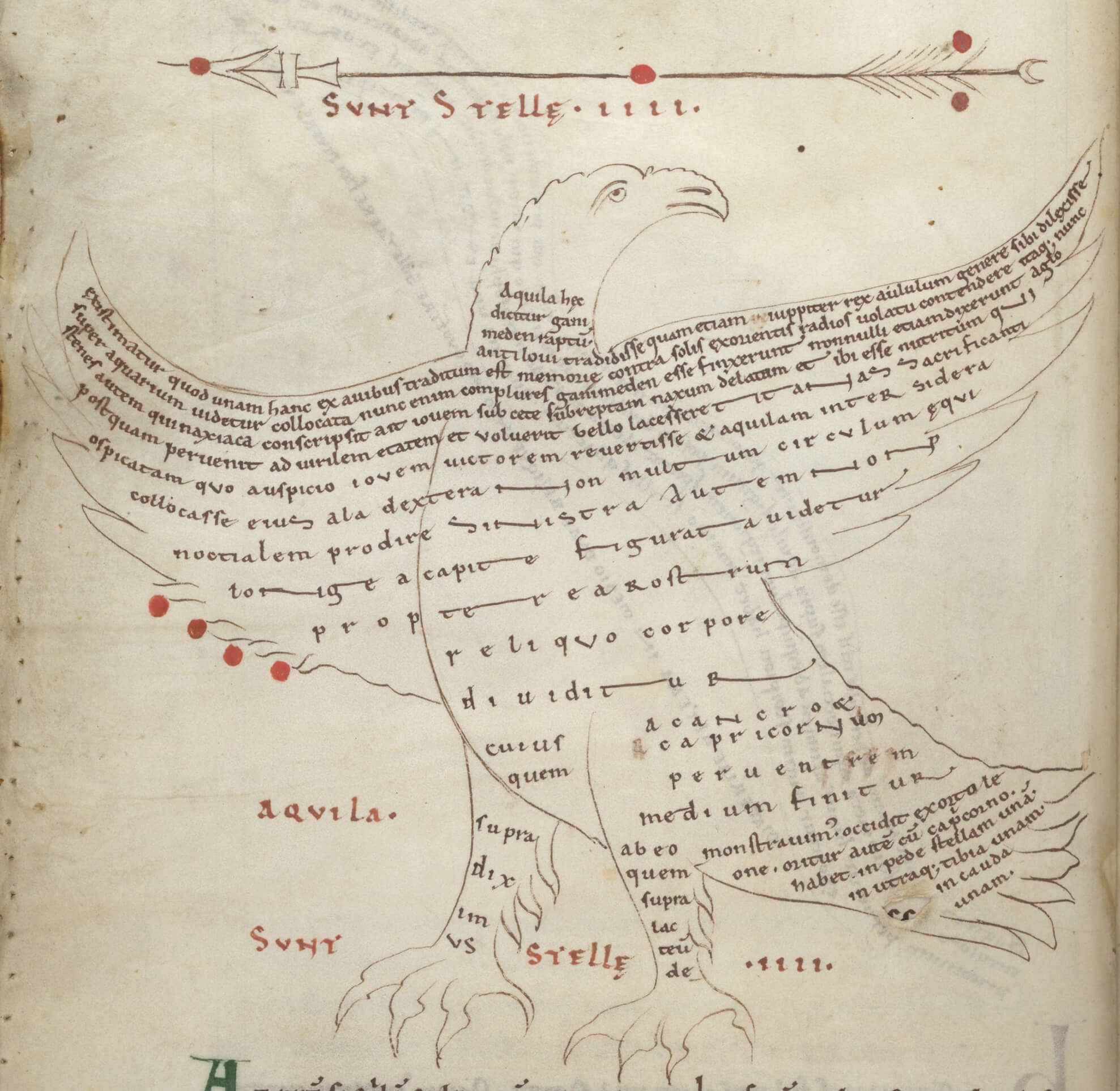
Constellation of Aquila Ink on vellum, Cotton MS Tiberius C I manuscript, anonymous, 12th century British Library, London |
||||||||||
| Aquila is presented in a fragmented and poetic account that combines mythological interpretation with observational astronomy, portraying the eagle as a figure of both symbolic meaning and celestial importance. It is a prominent constellation along the celestial equator, known for containing the bright star Altair and traditionally representing the eagle of Zeus. The illustration appears in Cicero’s Aratea, part of the Cotton MS Tiberius C I manuscript, which contains a miscellany of texts, including extracts from works by Isidore of Seville, Cicero, and Pliny the Elder. |
||||||||||
  |
||||||||||


