|
Amazon Ads |


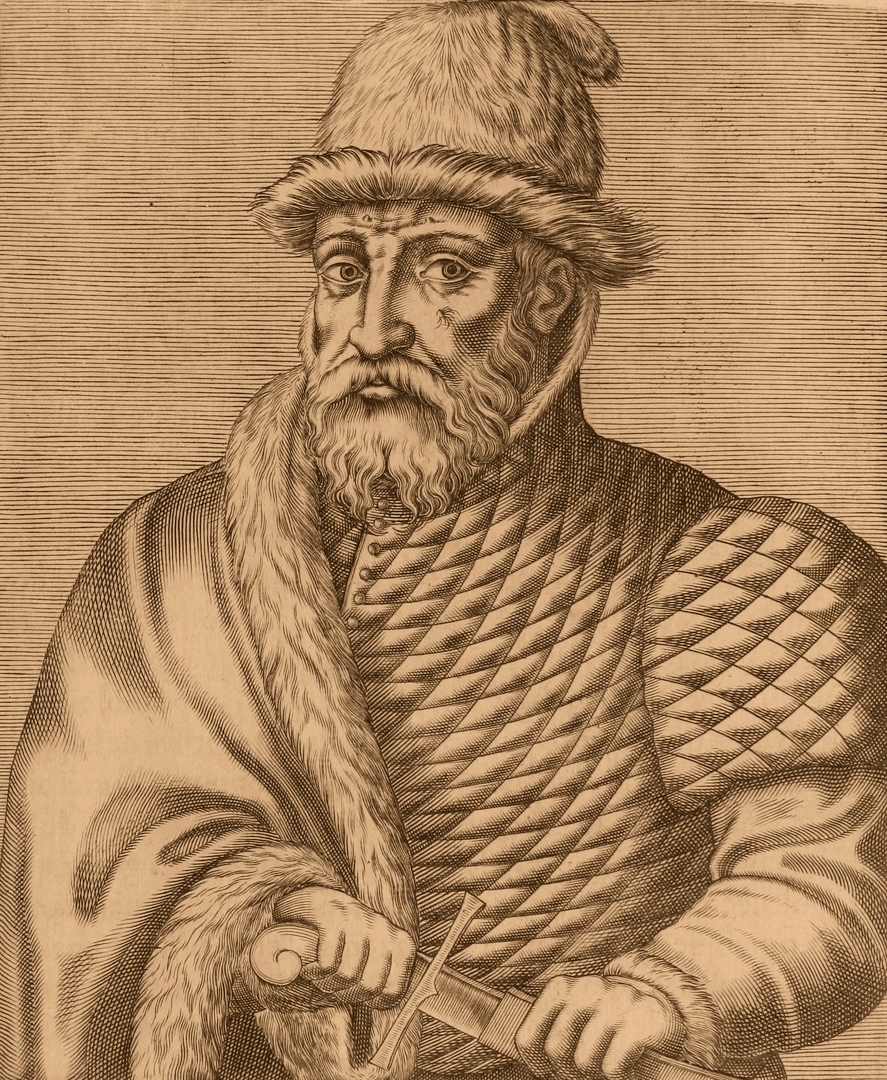
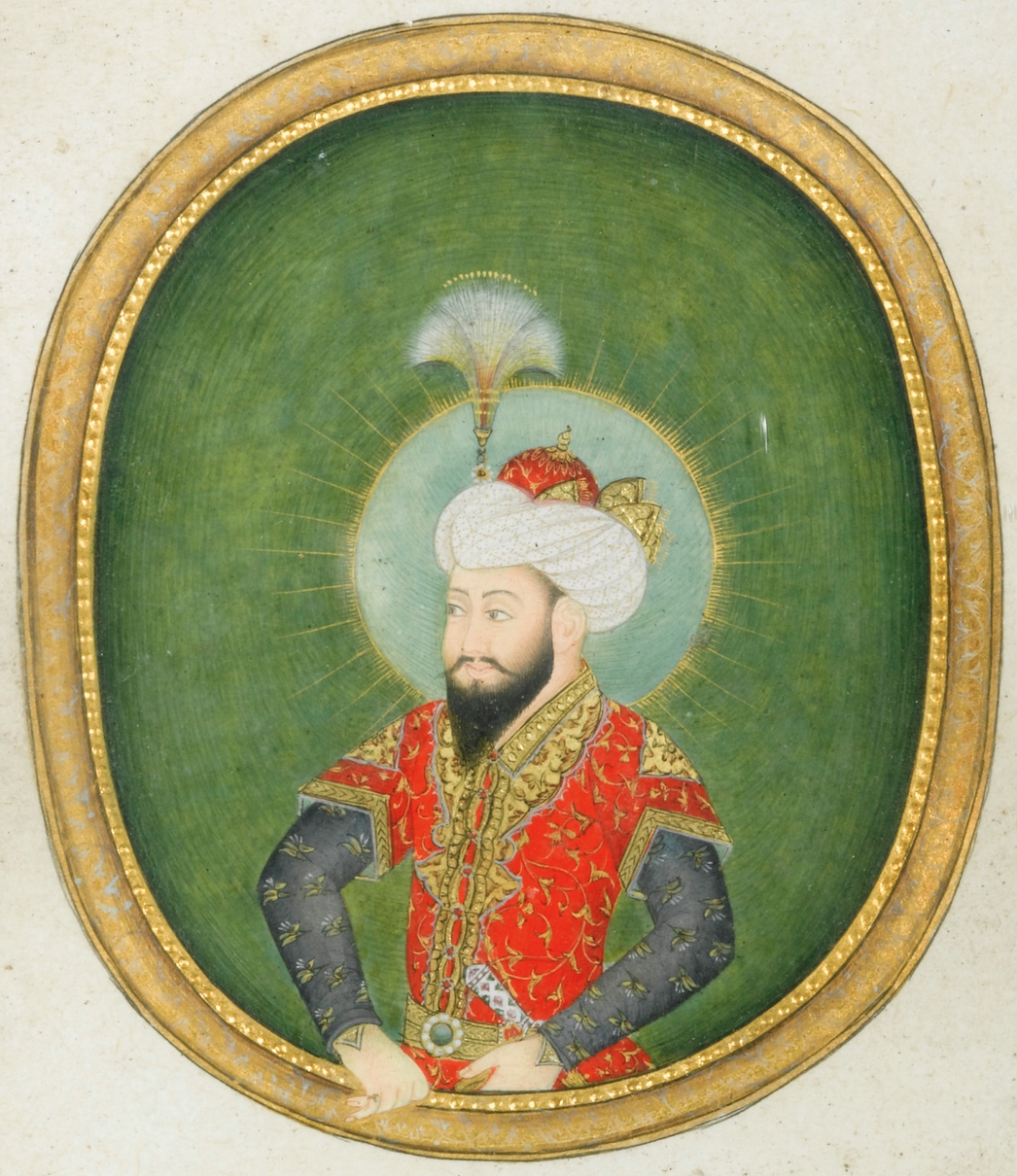
Timur
Ruler of the Timurid Empire
(1336–1405)
Other names: Temur i Leng (the Lame),
Tamerlane,
Timur-i lang
Titles
Lord of Transoxiana, 1370–1405†
Chief of the Barlas tribe
Gurkan
Biographical
Styled 'Sahib Qiran', because he reigned more than 30 years, or because
he was born in a conjunction of the planets so called, Timur was said,
by some, to be the son of a shepherd, and others that he was descended
from Qajuli Bahadur, son of Tumana Khan, of the same lineage with Genghis
Khan.
Under the eye of his father, Taraghay, who was head of
the tribe of Barlas, the education of young Timur was such that at the
age of twenty he had not only become an adept in manly outdoor exercises
but had earned the reputation of being an attentive reader of the Koran.
At this period, if we may credit the Memoirs (Malfuzat),
he exhibited proofs of a tender and sympathetic nature.
Distinguished by his courage and unbounded ambition, Timur soon gained
a number of faithful adherents, and seized the city of Balkh, the capital
of Khurasan, and having put to death Amir Husain, the ruler of that place,
whose sister he had married, he ascended the throne on the 10th April
1370,
mounting the throne at Samarkand, the capital of his dominions.
The next thirty years or so were spent in various
wars and expeditions. Timur conquered his enemies at home, and sought
to extend his dominions by invading other territories. His conquests to
the west and north-west led him among the Mongols of the Caspian and to
the banks of the Ural and the Volga; those to the south and south-west
included almost every province in Persia,
and he subdued Karbala, Baghdad, Kurdistan,
and Kandahar; seconded by an enthusiastic army,
he penetrated to India, and took Delhi in December 1398.
Timur was more than sixty years of age at the time, and Farishta
tells us that, 'informed of the commotions and civil wars of India', he
'began his expedition into that country', and on the 12th of September
'arrived on the banks of the Indus'. His passage of the river and upward
march along the left bank, the reinforcement he provided for his grandson
Pir Muhammad (who was invested in Multan), the capture of towns or villages
accompanied, it might be, with destruction of the houses and the massacre
of the inhabitants, the battle before Delhi and the easy victory, the
triumphal entry into the doomed city, with its outcome of horrors—all
these circumstances belong to the annals of India.
Timur then returned to punish Baghdad that shook
off his yoke; the offending city was given up to pillage, and 80,000 of
her inhabitants put to the sword.
In April 1399, some three months after quitting the capital of Mahmud
Tughluq, Timur was back in his own capital beyond the Oxus. It need scarcely
be added that an immense quantity of spoil was conveyed away. According
to Clavijo, ninety captured elephants were employed merely to carry stones
from certain quarries to enable the conqueror to erect a mosque at Samarkand.
Now master of the fairer
part of Asia, he interfered, at the request of the Greek emperor, in the
affairs of Bajazet, Emperor of the Turks, and commanded him to abandon
the siege of Constantinople. The message roused the indignation of Bajazet;
he marched against the new enemy, and was defeated by him in Phrygia,
after a battle of three days, in July 1402. Bajazet fell into the hands
of the emperor, and was carried about in mockery in an iron cage. To these
conquests Timur added Egypt and the treasures of Cairo, and then fixed
the seat of his empire at Samarqand, where he received the homage of Manuel
Palaeologus, Emperor of Constantinople, and of Henry III, King of Castile,
by their ambassadors. Timur was preparing fresh victories by the invasion
of China, when death stopped his career in the 36th year of his reign,
aged 71 years.
After his death he received the title of 'Firdaus Makani' ('May paradise
be his place of residence'). On his death-bed Timur named his grandson
Pir Muhammad, son of Jahangir Mirza, the universal heir of all his dominions;
but the contempt with which his will was treated after death was equal
to the veneration which had been paid to his authority during his life.
The Sultan Khalil, another of his grandsons, immediately took possession
of the capital of Samarqand, and proclaimed himself emperor.
Markham, in his introduction to the narrative of Clavijo's embassy,
states that his body 'was embalmed with musk and rose water, wrapped in
linen, laid in an ebony coffin and sent to Samarkand, where it was buried'.
Timur had carried his victorious arms on one side from the Irtish and
the Volga to the Persian Gulf and on the other from the Hellespont to
the Ganges.
Place of birth: Kesh (Shahr-i-Sabz)
Place of death: Otrar
 |
 |
 |
Sources
1. P.J. Bearman; Th. Bianquis, et al, eds. The Encyclopaedia of Islam, vol. 10. Leiden: E. J. Brill, 2000.
2. B.F. Manz. The Rise and Rule of Tamerlane. Cambridge, etc.: Cambridge University Press, 1989.
3. V. Minorsky; T. Minorsky. Four Studies of the History of Central Asia, vol. 2 (V.V. Barthold. Trans.). Leiden: E. J. Brill, 1958.
4. Encyclopaedia Britannica: A Dictionary of Arts, Sciences, Literature and General Information, 11th edn, vol. 26. New York: Encyclopaedia Britannica Co., 1911.
5. H.G. Keene. An Oriental Biographical Dictionary Founded on Materials Collected by Thomas William Beale. London: W. H. Allen & Co., Limited, 1894.
Families | Lands | Abbreviations and Symbols