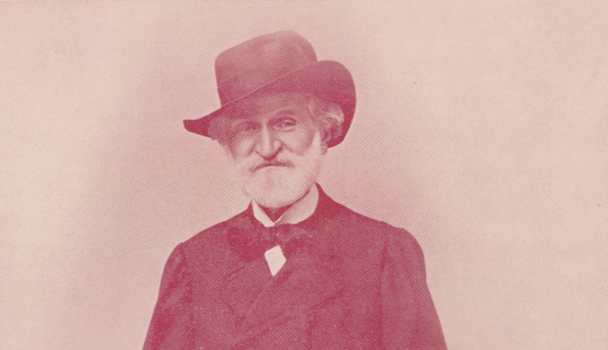
The works of Giuseppe Verdi
Romantic composer Giuseppe Verdi (1813–1901) is regarded
as the greatest Italian musical dramatist. His early career
found him composing works that achieved success within the
existing operatic framework. However, Verdi's artistic
vision evolved. He placed increasing importance on a tighter
integration of drama and music, ensuring a more unified
artistic experience. Psychological depth became a hallmark
of his operas. Characters were no longer simply heroes or
villains, but individuals with complex motivations and
emotions that resonated with audiences. This shift in focus
resulted in a series of masterpieces renowned for their
soaring melodies, powerful choruses, and their exploration
of the full spectrum of human experience. Verdi's influence
extended beyond opera. He also composed chamber music,
sacred pieces, and other instrumental music. This range
reflects his diverse musical talents and his ability to
excel in various genres and solidifying his place as one of
the most important composers of the era.
|
| |
Works |
| Operas |
|
# |
Title |
Other
Title |
Genre |
Libretto
Author |
Source |
Premiere |
|
1 |
Oberto,
conte di San Boniface |
|
Drama
in two acts |
Themistocle
Solera |
Verdi's
unperformed 1836 opera Rocester, with libretto by Antonio
Piazza. Revised and presented as Oberto. |
Milan,
Teatro alla Scala, 17 Nov. 1839 |
|
2 |
Un
giro di regna |
Il
finto Stanislao |
Comic
melodrama in two acts |
Felice
Romani |
Romani's
libretto for the 1818 play Il into Stanislao by Delbert Growth,
after the 1808 play Le faux Stanislaw by Alexander Pineal-Duval. |
Milan,
Teatro alla Scala, 5 Sept. 1840 |
|
3 |
Nabucodonosor |
Nabucco
· Anato
· Nino
· Sennacherib |
Lyrical
drama in four parts |
Temistocle
Solera |
The
1836 play Nabucodonosor by Auguste Anicet-Bourgeois and Francis
Cornu, and the 1838 ballet Nabucodonosor by Antonio Cortesi. |
Milan,
Teatro alla Scala, 9 Mar. 1842 |
|
4 |
I lombardi alla prima crociata |
|
Lyrical
drama in four acts |
Temistocle
Solera |
The
1826 poem of the same name by Tommaso Grossi. |
Milan,
Teatro alla Scala, 11 Feb. 1843 |
|
5 |
Ernani |
·
Demetrio Alvexi
· Elvira d'Aragona
· Ester
· Le proscrit
· Il proscritto |
Lyrical
drama in four parts |
Francesco
Maria Piave |
The
1830 play Hernani by Victor Hugo. |
Venice,
Teatro La Fenice, 9 Mar. 1844 |
|
6 |
I due Foscari |
Aachan |
Lyrical
tragedy in three acts |
Francesco
Maria Piave |
The
1821 play The Two Foscari by George Byron. |
Rome,
Teatro Argentina, 3 Nov. 1844 |
|
7 |
Giovanna d'Arco |
Orietta
di Lesbo |
Lyrical
drama with a prologue and three acts |
Temistocle
Solera |
In
part, the 1801 play Die Jungfrau von Orleans by Friedrich
Schiller. |
Milan,
Teatro alla Scala, 15 Feb. 1845 |
|
8 |
Alzira |
|
Lyrical
tragedy with a prologue and two acts |
Salvatore
Cammarano |
The
1736 play Alzire, ou Les Américains by Voltaire. |
Naples,
Teatro San Carlo, 2 Aug. 1845 |
|
9 |
Attila |
Gli
unni e i romani |
Lyrical
drama with a prologue and three acts |
Temistocle
Solera and Francesco Maria Piave |
The
1808 play Attila, König der Hunnen by Zacharias Werner. |
Venice,
Teatro La Fenice, 17 Mar. 1846 |
|
10 |
Macbeth |
·
Saul
· Sivardo il Sassone |
Opera
in four acts |
Francesco
Maria Piave and Andrea Maffei |
The
1605-06 play Macbeth by William Shakespeare. |
Florence,
Teatro La Pergola, 14 Mar. 1847 |
|
Macbeth (rev. version) |
|
Opera
in four acts |
French
translation by Charles Nuitter and Alexandre Beaumont |
Piave
and Maffei's 1857 libretto. |
Paris,
Théâtre Lyrique, 21 Apr. 1865 |
|
11 |
I masnadieri |
Adele
di Cosenza |
Melodrama
in four parts |
Andrea
Maffei |
The
1781 play Die Räuber by Friedrich Schiller. |
London,
Her Majesty's Theatre, 22 July 1847 |
|
12 |
Jérusalem |
Giselda |
Opera
in four acts |
Alphonse
Royer and Gustave Vaëz |
French
version of Verdi's I Lombardi alla prima Crociata. |
Paris,
Opéra, 26 Nov. 1847 |
|
13 |
Il corsaro |
|
Opera
in three acts |
Francesco
Maria Piave |
The
1814 poem The Corsair by George Byron. |
Trieste,
Teatro Grande, 25 Oct. 1848 |
|
14 |
La battaglia di Legnano |
·
L'assedio di Arlem
· Das heilige Feur
· Patria
· Pour la patrie
· La sconfitta degli Austriaci |
Lyrical
tragedy in four acts |
Salvatore
Cammarano |
The
1828 play La bataille de Toulouse by Joseph Méry. |
Rome,
Teatro Argentina, 27 Jan. 1849 |
|
15 |
Luisa Miller |
|
Melodrama
in three acts |
Salvatore
Cammarano |
The
1784 play Kabale und Liebe by Friedrich Schiller |
Naples,
Teatro San Carlo, 8 Dec. 1849 |
|
16 |
Stiffelio |
Guglielmo
Wellingrode |
Opera
in three acts |
Francesco
Maria Piave |
The
1848 play Le pasteur, ou L'èvangile et le Foyer by Emile
Souvestre and Eugène Bourgeois. |
Trieste,
Teatro Grande, 16 Nov. 1850 |
|
17 |
Rigoletto |
·
Clara di Pert
· Lionello
· Triboulet |
Melodrama
in three acts |
Francesco
Maria Piave |
The
1832 play Le roi s'amuse by Victor Hugo. |
Venice,
Teatro La Fenice, 11 Mar. 1851 |
|
18 |
Il
l trovatore |
The
Gypsy's Vengeance |
Drama
in four parts |
Salvatore
Cammarano and Leone E. Bardare |
The
1836 play El trovador by Antonio García Gutiérrez. |
Rome,
Teatro Apollo, 19 Jan. 1853 |
|
19 |
La traviata |
Violetta |
Opera
in three acts |
Francesco
Maria Piave |
The
1852 play Le dame aux caméllas by Alexandre Dumas. |
Venice,
Teatro La Fenice, 6 Mar. 1853 |
|
20 |
Les vêpres siciliennes |
·
Giovanna de Guzman
· Batilde di Turenna
· Giovanna di Sicilia
· Il vespro siciliano
· I vespri siciliani |
Opera
in five acts |
Eugène
Scribe and Charles Duveyrier |
The
1838 libretto Le duc d'Albe by Scribe and Duveyrier. |
Paris,
Opéra, 13 June 1855 |
|
21 |
Simon
Boccanegra |
|
Opera
with a prologue and three acts |
Francesco
Maria Piave and Giuseppe Montanelli |
The
1843 play Simón Bocanegra by Antonio García Gutiérrez. |
Venice,
Teatro La Fenice, 12 Mar. 1857 |
|
Simon
Boccanegra (rev.
version) |
|
Melodrama
with a prologue and three acts |
Arrigo
Boito |
Piave's
1857 libretto. |
Milan,
Teatro alla Scala, 24 Mar. 1881 |
|
22 |
Aroldo |
|
Opera
in four acts |
Francesco
Maria Piave |
After
Piave's 1850 libretto for Stiffelio. |
Rimini,
Teatro Nuovo, 16 Aug. 1857 |
|
23 |
Un
ballo in maschera |
·
Amelia
· Gustavo III
· Der verhängisvolle Maskenball |
Melodrama
in three acts |
Antonio
Somma |
The
1833 libretto Gustave III, ou Le bal masqué by Eugène Scribe. |
Rome,
Teatro Apollo
17 Feb. 1859 |
|
24 |
La
forza del destino |
Don
Alvaro |
Opera
in four acts |
Francesco
Maria Piave |
The
1835 play Don Álvaro, o La fuerza del Sino by Ángel de Saavedra
and a scene from the 1799 play Wallensteins Lager by Friedrich
Schiller. |
St
Petersburg, Imperial Theatre, 10 Nov. 1862 |
|
rev.
version |
|
Opera
in four acts |
Antonio
Ghislanzoni |
Piave's
1862 libretto. |
Milan,
Teatro alla Scala, 27 Feb. 1869 |
|
25 |
Don
Carlos |
|
Opera
in five acts |
Joseph
Méry and Camille Du Locle |
The
1787 dramatic poem Don Carlos by Friedrich Schiller. |
Paris,
Opéra, 11 Mar. 1867 |
|
Don
Carlo (rev.
version) |
|
Opera
in four acts |
Italian
translation by Achille De Lauzières |
Méry
and Du Locle's 1867 libretto. |
Milan,
Teatro alla Scala, 10 Jan. 1884 |
|
26 |
Aida
|
|
Opera
in four acts |
Antonio
Ghislanzoni |
A
scenario by Auguste Mariette. |
Cairo,
Opera House, 24 Dec. 1871 |
|
27 |
Otello |
|
Lyrical
drama in four acts |
Arrigo
Boito |
The
1604-05 play Othello by William Shakespeare. |
Milan,
Teatro alla Scala, 5 Feb. 1887 |
|
28 |
Falstaff |
|
Lyrical
comedy in three acts |
Arrigo
Boito |
The
plays The Merry Wives of Windsor (1600-01) and Henry IV (1597-98)
by Shakespeare. |
Milan,
Teatro alla Scala, 9 Feb. 1893 |
| Other
Operatic Compositions |
|
# |
Title |
Type |
Yr
Comp. |
Text
Source |
Other
Details |
|
1 |
La
capricciosa |
Overture |
1825-26 |
|
Supposedly
written at the age of twelve; premiered Teatro
Verdi inauguration, Busseto, 5 Aug. 1868 |
|
2 |
Io
la vidi |
Aria
for solo tenor, second tenor and orchestra |
1832–36? |
Calisto
Bassi's libretto for Giuseppe Persiani's opera // solitario
ed Elodia |
Probably
written as an exercise for his tutor, the composer Vincenzo
Lavigna. |
|
3 |
Pria
che scende sull'indegno |
Duet |
c.
1837? |
Antonio
Piazza? |
Duet for Leonora and
Cuniza in Oberto that was cut, probably originally
from Verdi's opera Rocester. |
|
4 |
D'innocenza
i cari inganní |
Cavatina |
1840 |
Temistocle
Solera? |
Composed for Luigia
Abbadia for her role of Cuniza in Oberto, but it was
discarded. |
|
5 |
Ah
Riccardo, al mia ragione |
Duet |
1840 |
Temistocle
Solera? |
Composed for Luigia
Abbadia and Lorenzo Salvi for their roles of Cuniza and Riccardo
in Oberto, but was discarded. |
|
6 |
Dove
corri, o sciagurata? |
Duet |
1841 |
|
Composed for Antonietta
Rainieri-Marini and Ignazio Marini for their roles of Leonora
and Oberto in Oberto, but was discarded. The text is
unknown. |
|
7 |
Ma
fin che un brando vindice |
Cabaletta |
1841 |
Temistocle
Solera? |
Composed for Ignazio
Marini for the title role in Oberto for a revival in
Barcelona in 1841, but was later transferred to Ernani
as Infin
che un brando vindice. |
|
8 |
Oh,
dischiuso è il firmamento |
Romanza |
1842 |
Temistocle
Solera |
Alternative setting
for Fenena's prayer composed for Almerinda Granchi in that role
in Nabucco for its Venetian premiere in 1842. |
|
9 |
Come
poteva un angelo |
Cabaletta |
1843 |
Temistocle
Solera |
Alternative setting
for Oronte's cabaleta composed for Antonio Poggi in that role
in I Lombardi for its revival at Senigallia. |
|
10 |
Odi
il voto, O grande iddio |
Aria |
1844 |
Francesco
Maria Piave |
Composed for Nicola
Ivanoff for the title role of Ernani, replacing the
original duet finale with 'Silvia' in the second act. |
|
11 |
Potrei
lasciar la margine |
Cavatina |
1845–46 |
|
Composed for Sofia
Loewe for the title role of Giovanna
d'Arco, for an 1845 revival. Text is unknown, and
the music is lost. |
|
12 |
Sì,
lo sento, Iddio mi chiama |
Cabaletta |
1846 |
Francesco
Maria Piave? |
Composed for Giovanni
Mario for his role of Jacopo in I due Foscari. |
|
13 |
Sventurato!
alla mia vita |
Romanza |
1846 |
Francesco
Maria Piave |
Composed for Nicola
Ivanoff for his role of Foresto in Attila, replacing
'Chi non avrebbe il misero' in the final act. The music is inaccessible. |
|
14 |
Oh
dolore! ed io vivea |
Romanza |
1846 |
Francesco
Maria Piave? |
Composed for Napoleone
Moriani f for his role of Foresto in Attila.
|
|
15 |
Prends
pitié de sa jeunesse |
Mélodie |
1858 |
The
poem Il
poveretto, by Manfredo
Maggioni |
The music of Verdi's
romanza ll poveretto was adapted to a French text for
the Maddalena rolein Rigoletto at a Brussels staging
of the opera. |
|
16 |
O
toi que j'ai chérie |
Romanze |
1863 |
|
Composed for the tenor
François Pierre Villaret for his role of Henri in the
Les vêpres siciliennes revival in Paris, replacing
the aria 'O jour de peine'. The text is unknown. |
|
17 |
Aida |
Overture |
1872 |
|
Revised overture withdrawn,
but published. |
| Choral
and Religious Works |
|
# |
Title |
Composed |
Text
Author |
Other
Details |
|
1 |
I
deliri di Saul, cantata for baritone and orchestra |
1828 |
Vittorio
Alfieri |
|
|
2 |
Le
lamentazioni di Geremia for baritone |
1829 |
Biblical,
arr. by Giovanni Leoni |
|
|
3 |
Laudate
pueri in D Major for tenors, bass, chorus and orchestra |
c.
1830-32 |
|
|
|
4 |
Qui
tollis in F Major for tenor, clarinet and orchestra |
c.
1830-32 |
|
|
|
3 |
Tantum
ergo in F Major for bass and orchestra |
c.
1830-32 |
|
|
|
5 |
Tantum
ergo in G Major for tenor and orchestra |
c.
1830-32 |
|
|
|
6 |
Messe
(Kyrie and Gloria), for soprano, tenors, bass and orchestra |
1832-34 |
|
A
collaborative work with Ferdinando Provesi. Premiered Busseto,
15 Sept. 1835. |
|
7 |
Gloria
Domine Deus for tenor, chorus and orchestra |
c.
1832-34 |
|
|
|
8 |
Tantum
ergo in G Major for tenor, orchestra, and organ |
1836 |
|
Composed
for the tenor Luigi Machiavelli. |
|
9 |
Suoni la tromba for 3-part male chorus and piano or
orchestra |
1849 |
Goffredo
Mameli |
Also
known as Inno popolare. |
|
10 |
Inno
delle nazioni for tenor, chorus and orchestra |
1862 |
Arrigo
Boito |
Composed
for London's Great Exhibition, and premiered at Her Majesty's
Theatre, London, 24 May 1862. |
|
11 |
Libera
me, Domine for soprano, chorus and orchestra |
1868-69 |
|
A
collaborative work for the Messa per Rossini. |
|
12 |
Messa
da Requiem for soloists, chorus and orchestra |
1874;
rev. 1875 |
|
Composed
to commemorate the anniversary of death of Alessandro Manzoni..
Premiered Milan, San Marco, 22 May 1874. |
|
13 |
Pater
nostro for five-part chorus, a cappella |
1880 |
Attributed
to Dante |
Composed
for a benefit concert. |
|
14 |
Ave
Maria for soprano and small string ensemble |
1880 |
Attributed
to Dante |
Composed
for a benefit concert. |
|
15 |
Quattro
pezzi sacri:
1. 'Ave Maria sulla scala enigmatica' for four-part unaccompanied
chorus
2. 'Laudi alla Vergine Maria' for 4-part women's chorus, a cappella
3. 'Te Deum' for double chorus and orchestra
4. 'Stabat mater' for double chorus and orchestra |
1.
1889,
rev. 1898
2. 1887–88
3. 1895-96
4. 1898 |
2.
From the final canto of Dante's Paradiso
4. Jacopone da Todi |
|
|
16 |
Laudi
alla Vergine Maria for 4-part women's chorus, a cappella |
1887–88 |
From
the final canto of Dante's Paradiso |
Published
as No. 3 of the Quattro pezzi sacri in 1898. |
|
17 |
Ave
Maria sulla scala enigmatica for four-part unaccompanied
chorus |
1889 |
|
Published
as No. 1 of the Quattro pezzi sacri in 1898. |
|
18 |
Pietà,
Signor, del nostro error profondo for tenor, solists and
piano |
1894 |
Adapted
from Arrigo Boito's De profundis |
Published
in the periodical Fata Morgana for the
victims of earthquakes in Sicily and Calabria |
|
19 |
Te
Deum for double chorus and orchestra |
1895–96 |
Jacopone da Todi |
Published
as No. 4 of the Quattro pezzi sacri in 1898. |
|
20 |
Stabat
mater for double chorus and orchestra |
1896–97? |
|
Published
as No. 2 of the Quattro pezzi sacri in 1898. |
| Vocal
Chamber Music |
|
# |
Title |
Yr
Comp./Publ. |
Text
Author |
|
1 |
Brindisi
(first version) |
1835 |
Andrea
Maffei |
|
2 |
Il
cinque maggio cantata |
c.
1836 |
Alessandro
Manzoni |
|
3 |
Sei
romanze for voice and piano:
1. 'Non t'accostare dall'urna'
2. 'More, Elisa, lo stanco poeta'
3. 'In solitaria stanza'
4. 'Nell'orror di notte oscura'
5. 'Perduta ho la pace'
6. 'Deh, pietoso, oh addolorata' |
1838 |
1.
Poem by Jacopo Vittorelli
2. Poem by Tommaso Bianchi
3. Poem by Jacopo Vittorelli
4. Poem by Carlo Angiolini
5. Poem by Wolfgang Goethe (trans. Luigi Balestra)
6. Poem by Wolfgang Goethe (trans. Luigi Balestra) |
|
4 |
Guarda
che bianca luna notturno for soprano, tenor, bass, flute
and piano |
1839 |
Poem
by Jacopo Vittorelli |
|
5 |
L'esule
(Vedi! la bianca luna) for voice and piano |
1839 |
Poem
by Temistocle Solera |
|
6 |
La
seduzione for voice and piano |
1839? |
Poem
by Luigi Balestra |
|
7 |
Chi
i bei dì m'adduce ancora for voice and piano |
1842/1948 |
Poem
by Wolfgang Goethe (trans. Luigi Balestra?) |
|
8 |
Cupo
è il sepolcre mutolo for voice and piano |
1843 |
Unknown
(Andrea Maffei?) |
|
9 |
È
la vita un mar d'affanni for voice and piano |
1844 |
Unknown |
|
10 |
Era
bella, ancor più bella for voice and piano |
1844 |
Unknown |
|
11 |
Il
tramonto for voice and piano (first vers.) |
1845 |
Andrea
Maffei |
|
12 |
Sei
romanze for voice and piano:
1. 'Il tramonto' (second vers.)
2. 'La zingara'
3. 'Ad una stella'
4. 'Lo spazzacamino'
5. 'Il mistero'
6. 'Brindisi' (second version) |
1845 |
1.
Poem by Andrea Maffei
2. Poem by Manfredo Maggioni
3. Poem by Andrea Maffei
4. Poem by Manfredo Maggioni
5. Poem by Felice Romani
6. Poem by Andrea Maffei |
|
13 |
Il
poveretto romanza |
1847 |
Poem
by Manfredo
Maggioni |
|
14 |
L'abondonée |
1849 |
Poem
by Marie
and Léon Escudier |
|
15 |
Fiorellin
che sorge appena berceuse for voice and piano |
1850 |
Poem
by Francesco
Maria Piave |
|
16 |
La
fiorara for voice and piano |
1853 |
E.
Buvoli |
|
17 |
Sgombra,
o gentil for voice and piano |
1858 |
Alessandro
Manzoni |
|
18 |
La
preghiera del poeta for voice and piano |
1858/1941 |
Poem
by Nicola
Sole |
|
19 |
Il
brigidino stornello for voice and piano |
1863/1948 |
Poem
by Francesco
Dall'Ongaro |
|
20 |
Stornello
(Tu dici che non m'ami) for voice and piano |
1869 |
Anonymous
poem |
|
21 |
O
virtù che provvidente for two-part soprano chorus and piano |
c.
1900 |
|