|

|
UC Picture Gallery
 |
|
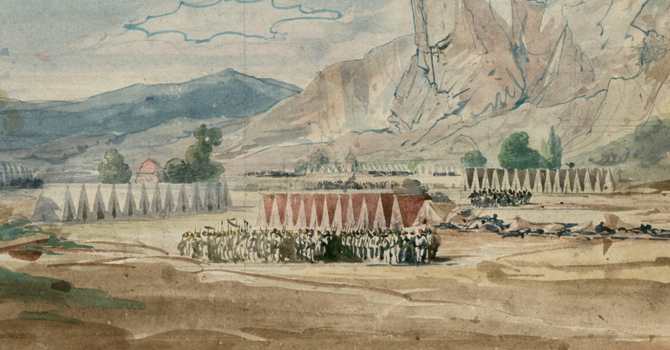
Xerxes
An opera seria with comedic elements in three acts by George
Frideric Handel, Xerxes' premiere took place at
the King's Theatre in London on the 15th of April 1738.
The opera explores the chaotic world of love, loyalty, and
betrayal within the Persian royal court. King Xerxes' capricious
desires take centre stage as he becomes enamoured with Romilda,
the daughter of his loyal general, Ariodate. This throws
a wrench into the existing romance between Romilda and Xerxes'
own brother, Arsamenes. Further complicating matters is
Amastre, a princess betrothed to Xerxes. Disguised as a
soldier, she remains close to the king despite his wandering
affections. As the opera unfolds, its characters grapple
with conflicting emotions – Xerxes' fleeting desires
clash with Arsamenes' unwavering devotion, while Amastre
struggles between her duty and her love for the fickle king.
Political manoeuvring and disguised identities add to the
complexity, with characters resorting to trickery and deception
in their pursuit of love or self-preservation. Ultimately,
Xerxes must navigate the consequences of his actions, reconcile
his personal desires with his responsibilities as king,
and find a resolution that satisfies all parties involved.
The opera is built on a series of arias, duets, and elaborate
ensembles with a continuo (harpsichord and cello) providing
harmonic support. Handel employs a variety of musical styles,
including Italianate da capo arias with contrasting sections,
lively dance movements, and powerful choruses. The libretto
used by Handel was adapted by an unknown author from the
work of Silvio Stampiglia, Il Xerse, written for
an opera of the same name by Giovanni Bononcini in 1694.
Stampiglia himself based his libretto on an even older one
by Nicolò Minato, used for Francesco Cavalli's Xerxe
in 1654. While the core story elements may have remained
consistent, adaptations over time likely reflected changing
theatrical styles and audience preferences. The opera garnered
mixed reviews after its 1738 premiere. Some critics praised
the opera's virtuosic music and lively characters, while
others found the plot convoluted and the humour uneven.
The opera's popularity waned in the following decades, but
it has seen a resurgence in recent times.
|
| |
The
Opera |
| Characters |
|
Name |
Description |
Voice
Type |
Premiere
Cast |
|
Xerxes |
King of Persia |
mezzo-soprano
(originally castrato) |
Caffarelli
(Gaetano Majorano) |
|
Arsamenes
|
Xerxe's
brother, in love with Romilda |
mezzo-soprano |
Maria
Antonia Marchesini |
Amastres |
heiress
to the kingdom of Tagor, and promised to Xerxes |
contralto |
Antonia
Merighi |
Romilda |
daughter
of Ariodates, in love with Arsamenes |
soprano |
Elisabeth
Duparc |
|
Atalanta |
daughter
of Ariodates, secretly in love with Arsamenes |
soprano |
Margherita
Chimenti |
|
Ariodates |
A
prince and commander of Xerxes' army |
bass |
Antonio
Montagnana |
|
Elviro |
servant
to Arsamenes |
bass |
Antonio
Lottini |
|
Chorus of soldiers, sailors, priests |
| Setting
|
|
Persia, 480 BC. |
| Acts
and Scenes |
|
Overture |
|
Act
I |
Role |
Scene
I |
|
1 |
Accompanied Recitative |
'Frondi tenere' |
Xerxes |
|
2 |
Arioso |
'Ombra mai fu' |
Xerxes |
Scene
II |
|
1 |
Recitative |
'Siam giunti, Elviro' |
Elviro |
|
2 |
Symphony and Recitative |
'Sento un soave concento' |
Arsamenes, Elviro |
|
3 |
Arioso and Recitative |
'O voi, che penate!' |
Romilda, Arsamenes, Elviro |
Scene
III |
|
1 |
Recitative |
'Arsamene! Mio Sire!' |
Xerxes, Arsamenes |
|
2 |
Aria |
'Va godendo vezzoso e bello' |
Romilda |
|
3 |
Recitative |
'Quel canto a un bel amor' |
Xerxes, Arsamenes |
|
4 |
Aria |
'Io le dirò che l'amo' / 'Tu le dirai che l'ami' |
Xerxes, Arsamenes |
Scene
IV |
|
1 |
Recitative |
'Arsamene! Romilda, oh Dei!' |
Romilda, Arsamenes, Atalanta |
|
2 |
Aria |
'Sì, sì, mio ben, sì, sì' |
Atalanta |
|
3 |
Recitative |
'Presto, signor' |
Elviro, Arsamenes |
Scene
V |
|
1 |
Recitative |
'Come, qui, Principessa' |
Xerxes, Romilda, Arsamenes, Elviro |
|
2 |
Aria |
'Meglio in voi col mio partire' |
Arsamenes |
Scene
VI |
|
1 |
Recitative |
'Bellissima Romilda' |
Xerxes |
|
2 |
Aria |
'Di tacere e di schernirmi' |
Xerxes |
Scene
VII |
|
1 |
Recitative |
'Aspide sono a’ detti tuoi' |
Romilda |
|
2 |
Aria |
'Nemmen coll'ombre' |
Romilda |
Scene
VIII |
|
1 |
Aria |
'Se cangio spoglia' |
Amastres |
Scene
IX |
|
1 |
Recitative |
'Pugnammo, amici' |
Ariodates, Amastres |
|
2 |
Chorus of Soldiers |
'Già la tromba, che chiamò' |
soldiers |
Scene
X |
|
1 |
Recitative |
'Ecco Serse, o che volto' |
Amastres, Xerxes, Ariodates |
|
2 |
Aria |
'Soggetto al mio volere' |
Ariodates |
|
3 |
Chorus of the Soldiers |
'Già la tromba, che chiamò' |
soldiers |
Scene
XI |
|
1 |
Recitative |
'Queste vittorie io credo' |
Xerxes, Amastres |
|
2 |
Aria |
'Più che penso alle fiamme' |
Xerxes |
Scene
XII |
|
1 |
Recitative |
'Eccoti il foglio, Elviro' |
Arsamenes, Elviro |
|
2 |
Arietta |
'Signor, signor, lasciate fare a me' |
Elviro |
|
3 |
Aria |
'Non so se sia la speme' |
Arsamenes |
Scene
XIII |
|
1 |
Recitative |
'Tradir di reggia sposa' |
Amastres |
|
2 |
Aria |
'Saprà delle mie offese' |
Amastres |
Scene
XIV |
|
1 |
Recitative |
'Alfin sarete sposa' |
Atalanta, Romilda |
|
2 |
Aria |
'Se l'idol mio rapir mi vuoi' |
Romilda |
Scene
XV |
|
1 |
Recitative |
'Per rapir quel tesoro' |
Atalanta |
|
2 |
Aria |
'Un cenno leggiadretto' |
Atalanta |
|
Act
II |
Role |
Scene
I |
|
1 |
Arioso |
'Speranze mie fermate' |
Amastres |
|
2 |
Arietta |
'Ah, chi voler fiora' |
Elviro |
|
3 |
Recitative |
'E chi direbbe mai' |
Elviro, Amastres |
|
4 |
Aria |
'Or che siete, speranze, tradite' |
Amastres |
Scene
II |
|
1 |
Recitative |
'Quel curioso è partito' |
Elviro |
|
2 |
Arioso |
'A piangere ogn’ora' |
Atalanta |
|
3 |
Arietta |
'Ah! Tigre infedele!' |
Elviro |
|
4 |
Recitative |
'Parti, il re s'avvicina' |
Atalanta, Elviro |
Scene
III |
|
1 |
Recitative |
'Con questo foglio' |
Atalanta |
|
2 |
Arioso |
'È tormento troppo fiero' |
Xerxes |
|
3 |
Recitative |
'Di quel foglio, Atalanta' |
Xerxes, Atalanta |
|
4 |
Aria |
'Dirà, che amor per me' |
Atalanta |
|
5 |
Recitative |
'Voi quel foglio lasciate a me' |
Xerxes, Atalanta |
|
6 |
Aria |
'Dirà, che non m'amò' |
Atalanta |
Scene
IV |
|
1 |
Recitative |
'Ingannata Romilda!' |
Xerxes, Romilda |
|
2 |
Duet |
'L'amerete?' - 'L'amerò.' |
Xerxes, Romilda |
|
3 |
Aria |
'Se bramate d'amar chi vi sdegna' |
Xerxes |
Scene
V |
|
1 |
Accompanied Recitative |
'L'amerò? Non fia vero.' |
Romilda |
|
2 |
Aria |
'È Gelosia quella tiranna' |
Romilda |
Scene
VI |
|
1 |
Recitative |
'Giacché il duol non m'uccide' |
Amastres, Elviro |
|
2 |
Aria |
'Anima infida, tradita io sono' |
Amastres |
Scene
VII |
|
1 |
Recitative |
'È pazzo affé!' |
Elviro, Arsamenes |
|
2 |
Aria |
'Quella che tutta fé' |
Arsamenes |
Scene
VIII |
|
1 |
Chorus of Sailors |
'La virtute sol potea' |
sailors |
|
2 |
Recitative |
'Ariodate! Signore' |
Xerxes, Ariodates |
|
3 |
Chorus of Sailors |
'La virtute sol potea' |
sailors |
Scene
IX |
|
1 |
Arioso |
'Per dar fine alla mia pena' |
Arsamenes |
|
2 |
Recitative |
'Arsamene, ove andate?' |
Xerxes, Arsamenes |
|
3 |
Aria |
'Sì, la voglio e la otterrò!' |
Arsamenes |
Scene
X |
|
1 |
Recitative |
'V'inchino, eccelso Rè' |
Atalanta, Xerxes |
|
2 |
Aria |
'Voi mi dite che non l'ami' |
Atalanta |
|
3 |
Recitative |
'Saria lieve ogni doglia' |
Xerxes |
|
4 |
Aria |
'Il core spera e teme' |
Xerxes |
Scene
XI |
|
1 |
Recitative |
'Me infelice' |
Elviro |
|
2 |
Arietta |
'Del mio caro Bacco amabile' |
Elviro |
Scene
XII |
|
1 |
Duet |
'Gran pena è gelosia!' |
Xerxes, Amastres |
|
2 |
Recitative |
'Aspra sorte!' |
Xerxes, Amastres |
Scene
XIII |
|
1 |
Recitative |
'Romilda, e sarà ver' |
Xerxes |
|
2 |
Arietta |
'Val più contento core' |
Romilda |
|
3 |
Recitative |
'Vuò ch’abbian fine' |
Xerxes, Romilda |
Scene
XIV |
|
1 |
Recitative |
'La fortuna, la vita' |
Amastres, Romilda |
|
2 |
Aria |
'Chi cede al furore' |
Romilda |
|
Act
III |
Role |
|
Overture |
Scene
I |
|
1 |
Recitative |
'Sono vani i pretesti' |
Arsamenes, Romilda |
Scene
II |
|
1 |
Recitative |
'Ahi! Scoperto è l’inganno!' |
Atalanta, Elviro, Arsamenes |
|
2 |
Arietta |
'No, no, se tu mi sprezzi' |
Atalanta |
Scene
III |
|
1 |
Recitative |
'Ecco in segno di fé' |
Romilda, Elviro, Arsamenes, Xerxes |
|
2 |
Aria |
'Per rendermi beato' |
Xerxes |
Scene
IV |
|
1 |
Recitative |
'Ubbidirò al mio re?' |
Arsamenes, Romilda |
|
2 |
Aria |
'Amor, tiranno Amor' |
Arsamenes |
Scene
V |
|
1 |
Recitative |
'Come già vi accennammo' |
Xerxes, Ariodates |
|
2 |
Aria |
'Dal ciel d'amore' |
Ariodates |
Scene
VI |
|
1 |
Recitative |
'Il suo serto rifiuto!' |
Romilda |
Scene
VII |
|
1 |
Recitative |
'Fermatevi, mia sposa' |
Xerxes, Romilda |
Scene
VIII |
|
1 |
Recitative |
'Prode guerrier' |
Romilda, Amastres |
|
2 |
Aria |
'Cagion son io del mio dolore' |
Amastres |
Scene
IX |
|
1 |
Recitative |
'Romilda infida' |
Arsamenes, Romilda |
|
2 |
Duet |
'Troppo oltraggi la mia fede' |
Romilda, Arsamenes |
Scene
X |
|
1 |
Chorus of Priests |
'Ciò che Giove destinò' |
priests |
|
2 |
Recitative |
'Ecco lo sposo!' |
Ariodates, Arsamenes, Romilda |
|
3 |
Chorus of Ministers |
'Chi infelice si trovò' |
ministers |
Scene
XI |
|
1 |
Recitative |
'Se ne viene Ariodate' |
Xerxes, Ariodates |
|
2 |
Aria |
'Crude Furie degl'orridi abissi' |
Xerxes |
Final Scene |
|
1 |
Recitative |
'Perfidi! E ancor osate' |
Xerxes, Ariodates, Arsamenes, Romilda |
|
2 |
Aria |
'Caro voi siete all'alma' |
Romilda |
|
3 |
Chorus |
'Ritorna a noi la calma' |
all |
 |
Sources:
1. Thomas Bauman, Marita Petzoldt McClymonds, eds. Opera
and the Enlightenment. Cambridge: Cambridge University
Press, 1995.
2. George Frideric Handel, Serse [DVD]. Rasmussen,
Hallenberg, Bardon, Bayrakdarian, Piau et al, Les Talens Lyriques,
conducted by Christophe Rousset, recorded 2000, TDK EuroArts
DV-OPSER, 2005.
3. George Frideric Handel, Serse [CD]. von Otter,
Norberg-Schulz, Piau, Zazzo, Santafé et al, Les Arts
Florissants Chœurs et Orchestre, conducted by William
Christie, recorded 2004, Virgin Classics, 2010.
|
|
|
|