|

|
UC Picture Gallery
 |
|
|
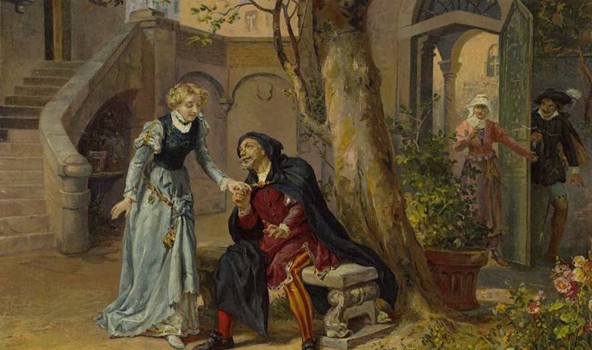
Rigoletto
Premiering on the 11th of March 1851 at the Teatro La Fenice,
Venice, Giuseppe Verdi's Rigoletto is an opera in three
acts that unfolds a captivating yet tragic narrative. Based
on Victor Hugo's 1832 play Le roi s'amuse, the
opera follows Rigoletto, the court jester of Mantua. Despite
his outward cynicism and mockery aimed at the Mantuan aristocracy,
Rigoletto harbours a deep love for his sheltered daughter,
Gilda. The opera's central conflict arises when a vengeful
nobleman, the Duke of Mantua, becomes infatuated with Gilda.
Rigoletto, unaware of the Duke's intentions, carelessly
mocks another nobleman for having a secret mistress, triggering
a chain of events that unleashes devastating consequences.
Consumed by rage upon discovering the Duke's deception,
Rigoletto hatches a plan for revenge, hiring a hitman to
eliminate the Duke. Composed with a libretto by Francesco
Maria Piave, Rigoletto is a cornerstone of the operatic
repertoire. The opera's enduring popularity stems from its
powerful storytelling, masterful use of melody – exemplified
by the Duke's iconic aria 'La donna è mobile' –
and its exploration of timeless themes. Rigoletto grapples
with social injustice, highlighting the cruelty faced by
those deemed different. It also delves into the complexities
of paternal love and the destructive power of vengeance,
leaving audiences pondering the true cost of retribution.
The opera's planned premiere in 1851 faced some initial
hurdles. Austrian censors, who held control over northern
Italian theatres at the time, took issue with the source
material, Le roi s'amuse. The play's portrayal
of a licentious king and its dark themes were deemed inappropriate.
Verdi was forced to make significant changes, including
altering the social status of the main characters. Originally,
Rigoletto was a nobleman, but to appease the censors, he
became a hunchbacked court jester. Despite these challenges,
the premiere proved triumphant. Rigoletto's success marked
a turning point in Verdi's career, solidifying his reputation
as a leading composer of the mid-19th century.
|
| |
The
Opera |
Characters |
|
Name |
Description |
Voice
Type |
Premiere
Cast |
|
Il
Duca di Mantova |
|
tenor |
Raffaele
Mirate |
|
Rigoletto |
court
jester to the Duca |
baritone |
Felice
Varesi |
|
Gilda |
daughter
to Rigoletto |
soprano |
Teresa
Brambilla |
|
Sparafucile |
an
assassin |
bass |
Paolo
Damini |
|
Maddalena |
sister
to Sparafucile |
contralto |
Annetta
Casaloni |
|
Giovanna |
duenna
to Gilda |
mezzo-soprano/
soprano |
Laura
Saini |
|
Il
Conte di Monterone |
|
baritone |
Feliciano
Ponz |
|
Marullo |
a
nobleman |
baritone |
Francesco
De Kunnerth |
|
Matteo
Borsa |
a
courtier |
tenor |
Angelo
Zuliani |
|
Il
Conte di Ceprano |
|
basso |
Andrea
Bellini |
|
La
Contessa |
wife
to the Count of Ceprano |
mezzo-soprano |
Luigia
Morselli |
|
Court
usher |
|
tenor |
Giovanni
Rizzi |
|
Page
to the Duchess |
|
mezzo-soprano |
— |
| Chorus
of gentlemen of the court, ladies, pages, halberdiers |
| Setting |
|
Mantua and surrounds, the sixteenth century. |
| Acts
and Scenes |
|
Act
I |
Role |
|
1 |
No. 1: Prelude |
|
|
|
|
2 |
No. 2: Introduction
[Scene I] |
|
'Della mia bella incognita borghese' |
Duca, Borsa |
|
3 |
|
Ballata |
'Questa o quella' |
Duca |
|
4 |
[Scene II] |
|
'Partite?... Crudele!' |
Duca, Contessa |
|
5 |
[Scene III] |
|
'In testa che avete, Signor di Ceprano?' |
Rigoletto, Ceprano, chorus, Borsa |
|
6 |
[Scene IV] |
|
'Gran nuova! gran nuova!' |
Marullo, chorus |
|
7 |
[Scene V] |
|
'Ah quanto Ceprano, importuno niun v'è' |
Duca, Rigoletto, Ceprano, chorus |
|
8 |
[Scene VI] |
|
'Ch'io gli parli' |
Monterone, Duca, Rigoletto, chorus |
|
9 |
No. 3: Duet
[Scene VII] |
Duet |
'Quel vecchio maledivami!' |
Rigoletto, Sparafucile |
|
10 |
No. 4: Scene and Duet
[Scene VIII] |
|
'Pari siamo!... io la lingua' |
Rigoletto |
|
11 |
[Scene IX] |
|
'Figlia!... Mio padre!' |
Rigoletto, Gilda |
|
12 |
|
Duet |
'Già da tre lune son qui venuta' |
Gilda, Rigoletto |
|
13 |
[Scene X] |
|
'Signor?... Venendo, mi vede alcuno?' |
Giovanna, Rigoletto, Gilda |
|
14 |
[Scene XI] |
|
'Alcuno è fuori' |
Rigoletto, Gilda, Giovanna, Duca |
|
15 |
No. 5: Scene and Duet
[Scene XII] |
|
'Giovanna, ho dei rimorsi' |
Gilda, Giovanna, Duca |
|
16 |
|
Aria |
'È il sol dell'anima' |
Duca, Gilda |
|
17 |
|
|
'Che m'ami, deh! ripetimi' |
Duca, Gilda, Ceprano, Borsa, Giovanna |
|
18 |
No. 6: Aria
[Scene XIII] |
Aria |
'Gualtier Maldè!... Caro nome che il mio cor' |
Gilda |
|
19 |
[Scene XIV] |
|
'É là.' |
Borsa, Ceprano, chorus, Marullo |
|
20 |
No. 7: First Finale
[Scene XV] |
Scene and Chorus |
'Riedo!... perché? - 'Silenzio... all'opera' |
Rigoletto, Borsa, Ceprano, Marullo |
|
21 |
|
|
'Zitti, zitti, moviamo a vendetta' |
chorus, Gilda, Rigoletto |
|
Act
II |
Role |
|
1 |
No. 8: Scene and Aria
[Scene I] |
|
'Ella mi fu rapita!' |
Duca |
|
2 |
|
|
'Parmi veder le lagrime' |
Duca |
|
3 |
[Scene II] |
Chorus |
'Duca, duca?' - 'Ebben?' |
Duca, chorus |
|
4 |
|
Stretta |
'Possente amor mi chiama' |
Duca, chorus |
|
5 |
No. 9: Scene and Aria
[Scene III] |
|
'Povero Rigoletto!' |
Marullo, chorus, Rigoletto, Ceprano |
|
6 |
[Scene IV] |
|
'Al suo sposo parlar vuol la duchessa' |
Page, Ceprano, Borsa, chorus, Rigoletto |
|
7 |
|
Aria |
'Cortigiani, vil razza dannata' |
Rigoletto |
|
8 |
No. 10: Scene and Duet
[Scene V] |
|
'Mio padre!' - 'Dio! mia Gilda!' |
Gilda, Rigoletto, chorus |
|
9 |
[Scene VI] |
|
'Parla...siam soli.'... 'Tutte le feste al tempio' |
Rigoletto, Gilda |
|
10 |
|
|
'Ah! Solo per me l'infamia' |
Rigoletto, Gilda |
|
11 |
[Scene VII] |
|
'Schiudete...' ... 'Poiché fosti invano da me maledetto' |
Court usher, Monterone, Rigoletto |
|
12 |
[Scene VIII] |
|
'Sì, vendetta, tremenda vendetta' |
Rigoletto, Gilda |
|
Act
III |
Role |
|
1 |
No. 11: Scene and Canzone
[Scene I] |
|
'E l'ami?' - 'Sempre' |
Rigoletto, Gilda |
|
2 |
[Scene II] |
|
'Ah padre mio!'... 'La donna è mobile' |
Gilda, Duca, Sparafucile, Rigoletto |
|
3 |
No. 12:
Quartetto
[Scene III] |
|
'Un dì, se ben rammentomi' |
Duca, Maddalena, Rigoletto, Gilda |
|
4 |
|
|
'Bella figlia dell'amore' |
Duca, Maddalena, Gilda, Rigoletto |
|
5 |
|
|
'M'odi! Ritorna a casa' |
Rigoletto, Gilda |
|
6 |
No. 13: Scena, Terzetto and Tempesta
[Scene IV] |
|
'Venti scudi hai tu detto?' |
Rigoletto, Sparafucile |
|
7 |
[Scene V] |
|
'La tempesta è vicina!... Maddalena?' |
Sparafucile, Duca, Maddalena |
|
8 |
|
Terzetto |
'È amabile invero cotal giovinotto' |
Maddalena, Sparafucile, Duca |
|
9 |
[Scene VI] |
|
'Amor mi trascina!' |
Gilda, Maddalena, Sparafucile |
|
10 |
No. 14: Scene and Final Duet
[Scene VII] |
|
'Della vendetta alfin giunge l'istante!' |
Rigoletto |
|
11 |
[Scene VIII] |
|
'Chi è là?' |
Sparafucile, Rigoletto |
|
12 |
[Scene IX] |
|
'Egli è là!' |
Rigoletto |
|
13 |
[Final Scene] |
|
'Mia figlia!...Dio!' |
Rigoletto, Gilda |
|
14 |
|
Duet |
'V'ho ingannato... colpevole fui...' |
Gilda, Rigoletto |
 |
Sources:
1. Julian Budden. Le opere di Verdi. Volume primo: da
Oberto a Rigoletto. Turin: Editoriale di Torino, 1985.
2. Giuseppe Verdi, Rigoletto [DVD]. Domingo, MacNeil,
Cotrubas, Díaz, Jones et al, Metropolitan Opera Orchestra
and Chorus, conducted by James Levine, recorded 1977, Deutsche
Grammophon, 2004.
3. Giuseppe Verdi, Rigoletto [CD]. Fischer-Dieskau,
Bergonzi, Scotto, Cossotto, Vinco et al, Coro e Orchestra
del Teatro alla Scala, conducted by Rafael Kubelík,
recorded 1964, Deutsche Grammophon, 2005.
Translation by Rosa Nardi.
|
|
|
|