|

|
UC Picture Gallery
 |
|
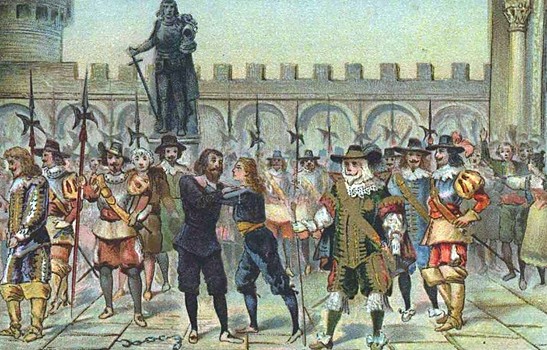
Fidelio
Fidelio is a two-act opera by Ludwig van Beethoven,
with a libretto by Joseph Sonnleithner, Stephan von Breuning,
and Georg Friedrich Treitschke. The opera tells the story
of Leonore, who disguises herself as a man named Fidelio
to rescue her husband Florestan, a political prisoner unjustly
held by the tyrant Don Pizarro. Set in a Spanish prison
during the era of political oppression, the narrative explores
themes of love, loyalty, and the struggle for freedom. Through
Leonore's courage and determination, the opera culminates
in a triumphant finale, celebrating the triumph of love
and justice over tyranny. The opera is scored for a standard
classical orchestra, including strings, woodwinds, brass,
and percussion, with prominent roles for the vocal soloists.
Structurally, it follows traditional operatic conventions
with recitatives and arias, that advance the plot and reveal
the characters' emotions, and it incorporates elements of
both opera seria and opera buffa. Upon its premiere at the
Theater-an-der-Wien, on the 20th of November 1805, it faced
mixed reviews. While some praised Beethoven's innovative
score and the opera's themes of liberty and heroism, others
criticised its length, complex plot, and departure from
operatic conventions of the time. Beethoven himself was
dissatisfied with the reception and made revisions to the
opera for subsequent performances. Today, it is considered
one of the greatest operas in the repertoire, admired for
its dramatic intensity and musical innovation.
|
| |
The
Opera |
|
Characters |
|
Name |
Description |
Voice
Type |
Premiere
Cast |
|
Don
Fernando |
Minister
of State |
bass |
NN
Weinkopf |
|
Leonore |
wife
of Florestan under the guise of 'Fidelio' |
soprano |
Pauline
Anna Milder
(later Milder-Hauptmann) |
|
Don
Pizarro |
overseer
of the prison |
baritone |
Friedrich
Sebastian Mayer |
Rocco |
jailer |
bass |
NN
Rothe |
|
Marzelline |
daughter
of Rocco |
soprano |
Louise
Müller |
|
Florestan |
prisoner
of state and Leonore's husband |
tenor |
Friedrich
Christian Demmer |
|
Jaquino |
turnkey
and porter |
tenor |
Josef
Caché |
First
prisoner |
|
tenor |
unknown |
Second
prisoner |
|
bass |
unknown |
Chorus
of soldiers, prisoners and people |
| Setting
|
| A
state prison near Seville, 1700s. |
| Acts |
| Overture |
Act
I |
Role |
Scene
I |
|
1 |
Duet |
'Jetzt, Schätzchen'
|
Jaquino, Marzelline |
|
2 |
Recitative |
'Der arme Jaquino'
|
Marzelline |
3 |
Aria |
'O wär' ich schon mit dir vereint'
|
Marzelline |
4 |
Recitative |
'Ist Fidelio nochnicht zurück gekommen?'
|
Rocco, Marzelline, Leonore |
|
5 |
Quartet |
'Mir ist so wunderbar' |
Marzelline, Leonore, Rocco, Jaquino |
|
6 |
Recitative |
'Höre, Fidelio' |
Rocco, Marzelline, Leonore |
|
7 |
Aria |
'Hat man nicht auch Gold beineben'
|
Rocco |
|
8 |
Recitative |
'Ihr könnt das leicht sagen' |
Leonore, Rocco, Marzelline |
|
9 |
Trio |
'Gut Söhnchen, gut' |
Rocco, Leonore, Marzelline |
Scene
II |
10 |
March |
|
[orchestra] |
11 |
Recitative |
'Drei Schildwachen auf den Wall'
|
Pizarro, Rocco |
12 |
Aria with Chorus |
'Ha! Welch ein Augenblick!'
|
Pizarro, chorus |
13 |
Recitative |
'Hauptmann!'
|
Pizarro |
14 |
Duet |
'Jetzt, Alter, hat es Eile!'
|
Pizarro, Rocco |
15 |
Recitative and Aria |
'Abscheulicher! Wo eilst du hin?'
|
Leonore |
16 |
Recitative |
'Rocco, ich ersuchte euch schon' |
Leonore, Rocco, Marzelline |
17 |
Chorus (Finale) |
'O welche Lust!' |
chorus, first prisoner, second prisoner |
18 |
Recitative and Duet |
'Nun sprecht, wie ging's?'
|
Leonore, Rocco |
19 |
Quintet with Chorus |
'Arch! Vater, eilt! |
Marzelline, Leonore, Jaquino, Pizarro, Rocco |
20 |
Overture to 'Leonore', No. 3 |
|
[orchestra] |
Act
II |
Role |
Scene
I |
1 |
Introduction |
|
[orchestra] |
2 |
Aria |
'Gott! Welch' Dunkel hier!'
|
Florestan |
3 |
Melodrama and Duet |
'Wie Kalt ist es' |
Leonore, Rocco |
4 |
Recitative |
'Er erwacht!' |
Leonore, Rocco, Florestan |
5 |
Trio |
'Euch werde Lohn in besser'n Welten'
|
Florestan, Rocco, Leonore |
6 |
Recitative |
'Alles ist bereit' |
Rocco, Leonore, Florestan, Pizarro |
7 |
Quartet |
'Er sterbe!' |
Pizarro, Florestan, Leonore, Rocco |
8 |
Recitative |
'O, meine Leonore'
|
Florestan, Leonore |
9 |
Duet |
'O namenlose Freude!'
|
Leonore, Florestan |
Scene
II |
10 |
Chorus (Finale) |
'Heil sei dem Tag' |
chorus, Fernando, Rocco, Pizarro, Leonore, Marzelline |
11 |
Scene with Chorus |
'Des besten Königs Wink und Wille'
|
Fernando, et al |
12 |
Chorus |
'Bestrafet sei der Bösewicht' |
|
13 |
Quintet with Chorus |
'O Gott!' |
Leonore, Florestan, Fernando, Marzelline, Rocco, chorus |
14 |
Chorus with Quintet |
'Wer ein holdes Weib errungen' |
chorus, Florestan, Leonore, Marzelline, Jaquino, Fernando, Rocco |
15 |
Overture to 'Leonore', No. 1 |
|
[orchestra] |
16 |
Overture to 'Leonore', No. 2 |
|
[orchestra] |
 |
Sources:
1. Ludwig Van Beethoven. Fidelio: An Opera in Two Acts.
New York: G. Schirmer, 1907.
2. Ludwig Van Beethoven, Fidelio [CD]. Brewer, Mac
Master, Sigmundsson, Matthews, Uusitalo et al, London Symphony
Orchestra, conducted by Sir Colin Davis, recorded 2006, LSO
Live, 2007.
3. W.M. Senner. The Critical Reception of Beethoven's
Compositions by His German Contemporaries, vol. 2. Lincoln,
NE: University of Nebraska Press, 2001.
|
|
|
|