  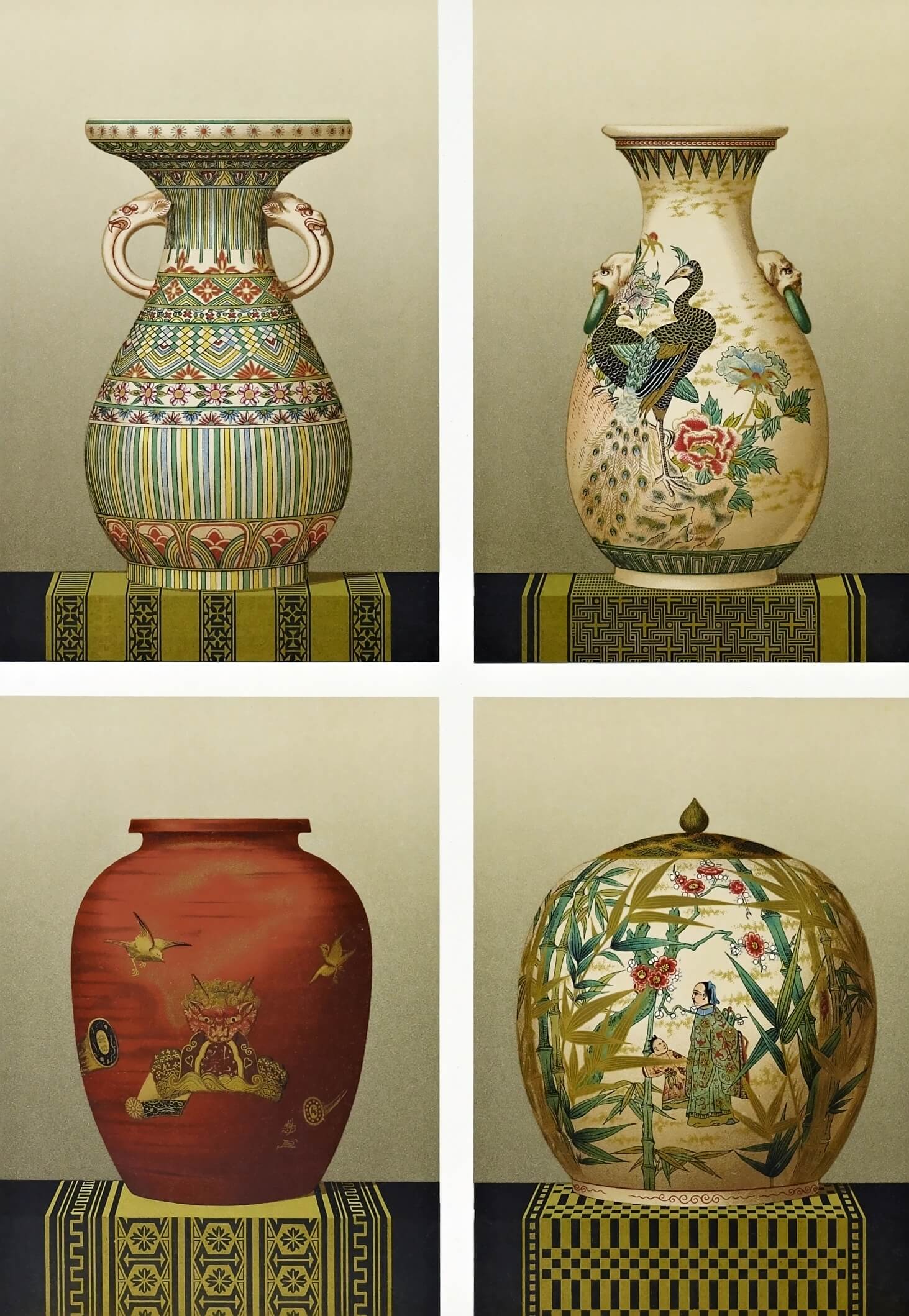
Satsuma faience: vases and jar A — Vase of fine middle period Satsuma faience, of cream-tinted hard pate, covered with bright glaze, crackled. This interesting piece is a good specimen of the ware, decorated in a style of excessive severity. Height: 11¾ inches. B — Vase of fine middle period Satsuma faience of cream-tinted hard pate, covered with bright glaze, crackled, and most tastefully decorated with birds and flowers, carefully painted and richly relieved with gold. The standing peacock, shown in the plate, is an illustration of the skill of the Japanese artists in bird drawing for decorative purposes. The simple and severe decoration of the bell mouth of this vase is almost worthy of early classic art. Height: 14½ inches. C — Jar of ancient Satsuma pottery, of dark brown colour, partly covered with glaze. This interesting piece is stated by a trustworthy native authority to be one of the jars in which choice tea was, in early times, sent by the princes of Satsuma as a present to the court of Kyoto. It is probably, therefore, of a ware which dates anterior to the introduction of the cream-tinted faience, and was made by the Korean potters who founded the Satsuma factory in 1592. These jars appear to be highly prized, and the specimen in question has, at a later period, in all probability, been ornamented with raised decorations in lacquer, clearly indicating a value attached to it beyond that created by any intrinsic merit it possessed either as an article of utility or beauty. In addition to several birds, the ornaments introduced on this jar, in lacquer, are an oni and a kawara, features placed, for decorative and symbolical purposes, on the roofs of temples and palaces. Height: 9¾ inches. D — Globular-shaped jar of modern faience, of soft pate, covered with bright glaze, crackled. This piece is in all probability of Ota manufacture, and if so should be correctly classed as imitation Satsuma faience. The jar is a fine specimen of Japanese decorative art, the bamboos and red mume being treated in a masterly manner. The cover is of lacquered tortoise-shell. Height: 12 inches. Lithograph, by Spiegel, published 1875.
|
|


