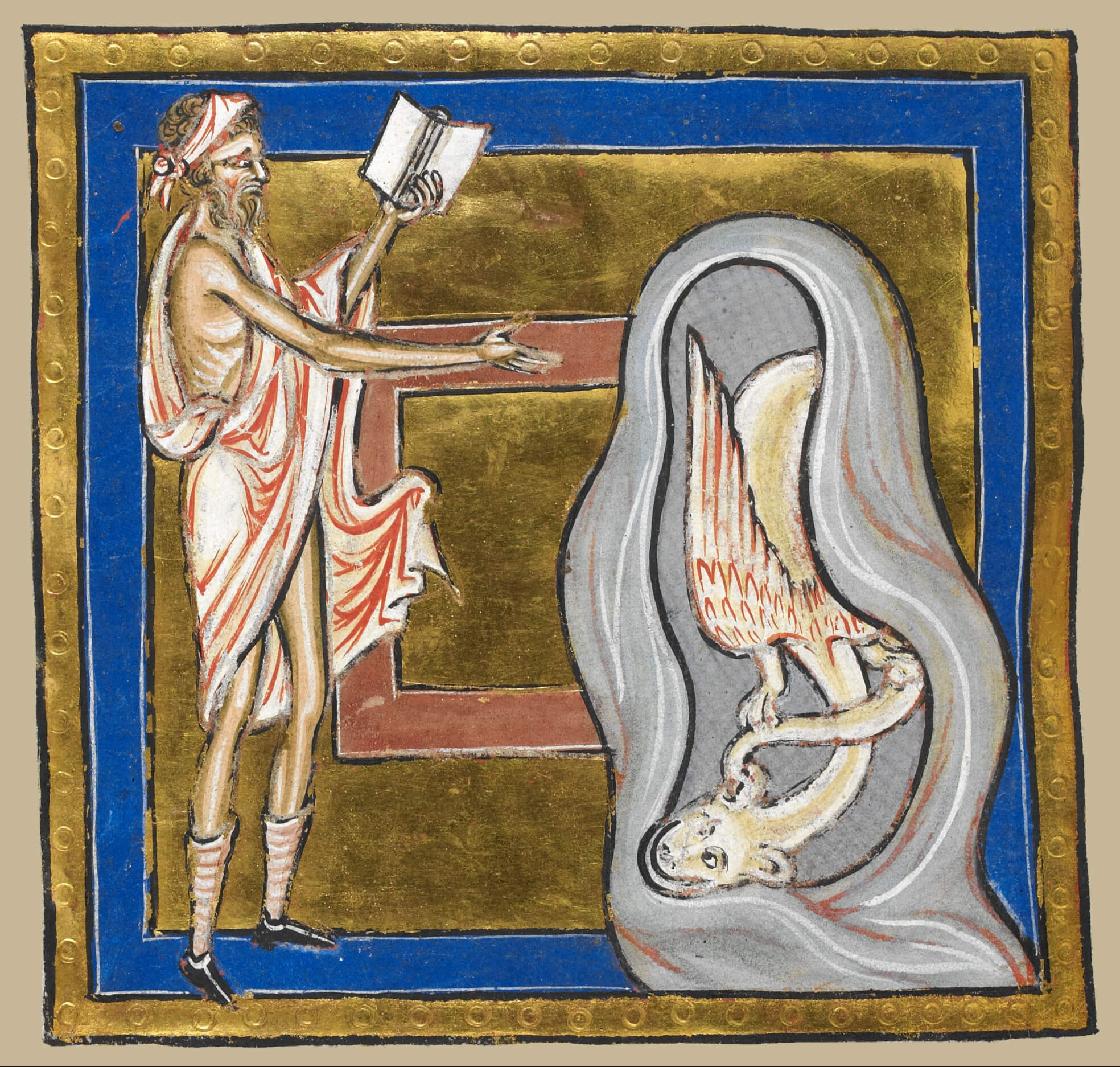
    Man with a winged asp From the manuscript Royal 12 C XIX, f. 65v, 13th century, English The British Library In this English bestiary appears an illustration depicting a man with a winged asp, a striking image that reflects the manuscript’s blend of natural history and moral allegory. Mediaeval bestiaries often portrayed the asp as a serpent with unusual features, including wings, using such depictions to convey lessons about vigilance and the dangers of sin. In this particular image, the man engages with the asp in a way that reinforces these symbolic meanings, possibly illustrating a well-known belief at the time that asps, when hunted, would press one ear to the ground and cover the other with their tail to avoid hearing the sound of a charmer’s flute. This act was interpreted as a warning against wilful ignorance of divine truth. The pairing of man and asp in this bestiary highlights the manuscript’s purpose as a moral guide, using vivid illustrations to teach ethical and spiritual lessons. Such imagery was not merely decorative but played a crucial role in mediaeval thought, where interactions between humans and animals were imbued with deeper significance, linking the natural world to the moral struggles of human life.   |
|


