
|
|
|
|||||||||
 |
||||||||||
| Hendrick Goltzius (1558–1617) | ||||||||||
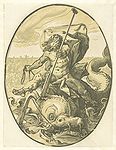
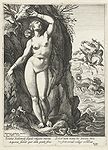
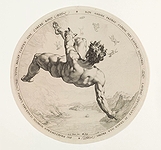
| Goltzius, a painter and engraver working both on metal and wood, was born in Mülbrecht, in the duchy of Jülich. His father, Johann Goltzius, an accomplished glass-painter, introduced him to the fundamentals of art, while Dirk Cuerenhert taught him engraving. Goltzius advanced quickly, surpassing his master, who employed him to engrave several plates, alongside works for Philipp Galle. At the age of twenty-one, he married a wealthy widow, the mother of Jakob Matham, which allowed him to set up his own printing press. However, this did not bring him happiness, and ongoing domestic strife took a toll on his health, prompting him to travel south. His journey took him through Germany to Italy, where he studied the works of Michelangelo, Raphael, and Polidoro da Caravaggio. His intense desire to imitate Michelangelo's style led him into excessive and sometimes extreme designs, though his engraving skills were remarkable. During his time in Rome, Goltzius engraved plates after Raphael, Polidoro, and others. Upon returning to Holland, he settled in Haarlem and created engravings based on Flemish and Dutch masters. He successfully mimicked the styles of Albrecht Dürer, Lucas van Leyden, and other revered old masters, producing a set of six large plates known as the Masterpieces of Goltzius. These works were not considered his finest, but rather demonstrated his ability to replicate the distinctive styles of artists held in higher regard than his own. At forty-two, Goltzius began painting, with his first work depicting the Crucifixion, featuring the Virgin Mary and St John. Van Mander praised its bold colouring and execution. While he is better known as an engraver than a painter, his print output exceeds five hundred works. He died in Haarlem. | ||||||||||
| |
||||||||||


 |
||||||||||
|
|
||||||||||
| |
||||||||||
  |
||||||||||


 Art
Art