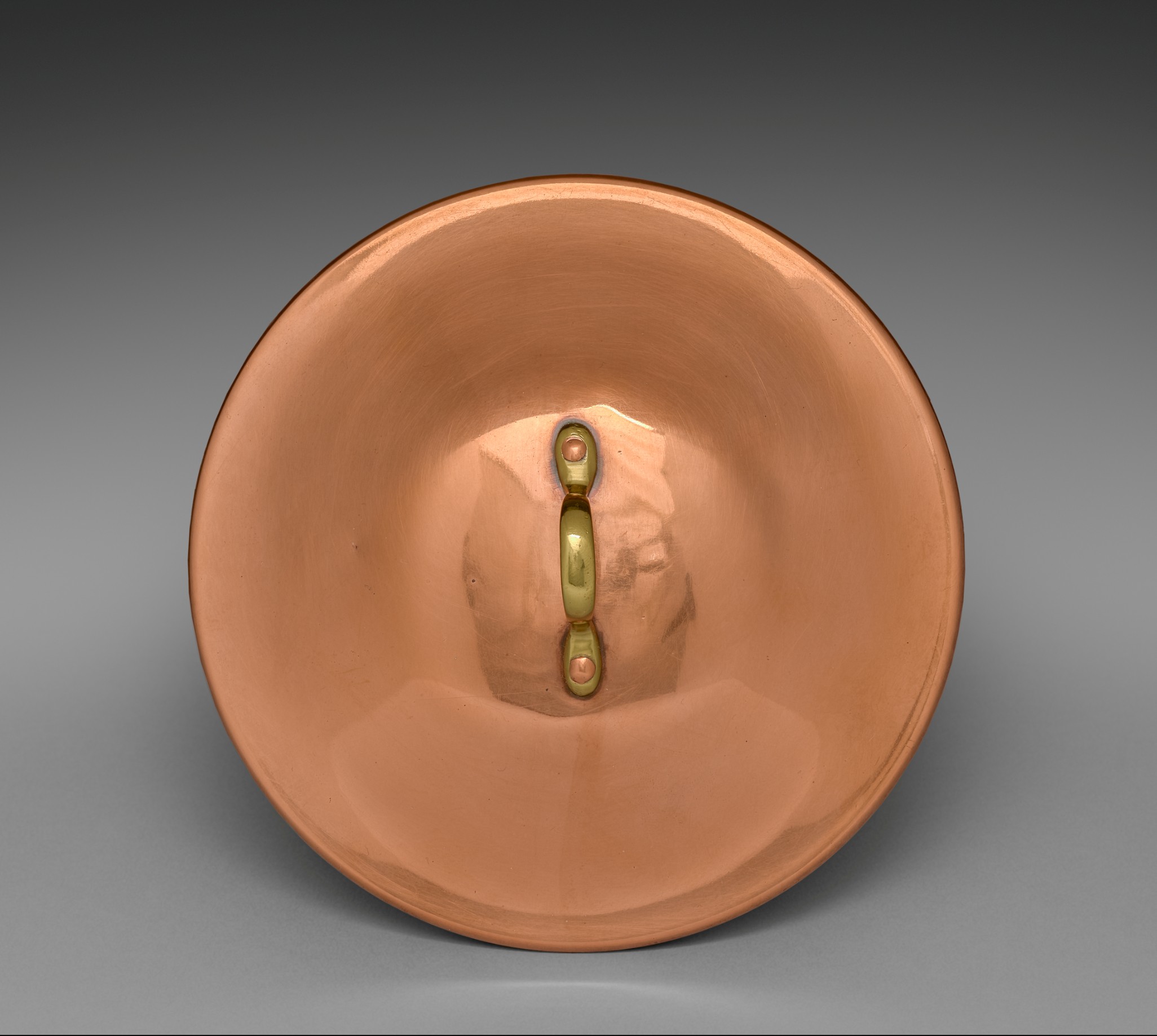
Pot Cover
Copper with brass handles; by Fabergé, 1914
Cleveland Museum of Art, Cleveland, Ohio
During the First World War, as Russia faced austerity and economic
strain even among the aristocracy, luxury items became impractical
amidst widespread suffering and loss on the front lines. Carl
Fabergé, known for his opulent creations, shifted production to
support the war effort by crafting munitions like shells and casings
from brass and copper. Among these efforts was a small, covered soup
pot, intended to carry provisions to soldiers at the front. Despite
its utilitarian purpose, this pot symbolised a contradiction:
designed to appear affordable, it remained a luxury reserved for
wealthy families who could afford to send such comforts to their
sons in wartime.