
|
|
|
|||||||||
 |
||||||||||
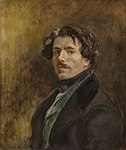
| Eugène Delacroix (1798–1863) | ||||||||||
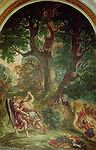
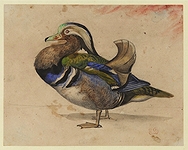
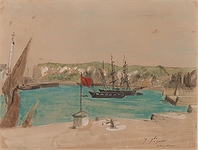
| A French historical painter and leader of the Romantic movement, Delacroix was born at Charenton-St-Maurice, near Paris. At seven, he was enrolled in the Lycée Napoléon by his mother. Choosing to become a painter, he later joined the studio of Baron Guérin. His first significant work, Dante and Virgil, debuted at the 1822 Salon, sparking intense debate—some even claimed that Géricault had contributed to it—and earned him recognition. Although he might have achieved academic honours, Delacroix, along with Géricault and others, rejected the rigid classicism of the David school, aligning himself with the emerging Romantic movement. With a modest inheritance, wisely managed, Delacroix was able to focus on large historical paintings. By 1831, he returned to the Salon with six pieces. His travels to Spain and Morocco soon after greatly influenced his work. Notably, he never visited Italy, fearing that exposure to the old masters might stifle his own creativity. His literary inspirations came from poets like Byron and Shakespeare, the latter particularly impacting his approach to tragedy. Though he painted classical subjects, Delacroix’s focus remained on creating original, emotionally powerful works. Despite his hard work, his paintings were often met with criticism at the Salon. In 1845, he was tasked with decorating the Luxembourg library, and two years later, worked on the chamber of deputies. In 1849, he painted the ceiling of the gallery of Apollo in the Louvre, and in 1853, the ceiling of the Salon de la Paix at the Hôtel de Ville. Delacroix died in Paris, and the following year, an exhibition of his works was held on Boulevard des Italiens, featuring 174 paintings and 303 drawings, displaying his dedication, energy, and wide-ranging versatility. | ||||||||||
| |
||||||||||


 



  |
||||||||||
|
|
||||||||||
| |
||||||||||
  |
||||||||||


 Art
Art