
|
|
|
|||||||||
 |
||||||||||
| Pierre Bonnard (1867–1947) | ||||||||||
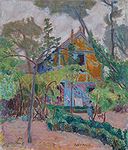
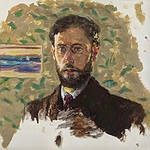
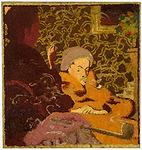
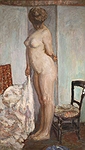
| Bonnard was a French painter, illustrator and lithographer renowned for his mastery of colour and his intimate depictions of everyday life. Initially studying law at his father’s insistence, he soon turned to art, enrolling at the Académie Julian, where he became a founding member of Les Nabis, a Post-Impressionist group that included Maurice Denis and Édouard Vuillard. Influenced by Japanese woodblock prints, the vibrant palette of Gauguin and the theatrical compositions of Toulouse-Lautrec, Bonnard developed a distinctive style grounded in figuration and emotional depth. While many of his contemporaries embraced abstraction, he remained devoted to capturing intimate interiors, quiet landscapes and domestic scenes, often painting from memory to evoke fleeting effects of atmosphere. His works subordinated clarity of form to colour harmony, creating immersive environments in which form dissolves into luminous fields of tone. Throughout his career, his ability to manipulate colour to evoke mood set him apart, particularly in his later works, which expanded into broader landscapes and mythological themes, reflecting influences from Hellenistic sculpture and Venetian painting. Bonnard dedicated himself to a personal, introspective vision, turning the ordinary into the sublime and transforming everyday moments into reflections on colour and human experience. He moved to Le Cannet in the later years of his life, where he found inspiration for his work. The scenery of the area, especially the view of the Mediterranean, influenced his later paintings, and it was there that he died. | ||||||||||
| |
||||||||||


  |
||||||||||
|
|
||||||||||
| |
||||||||||
  |
||||||||||


 Art
Art