


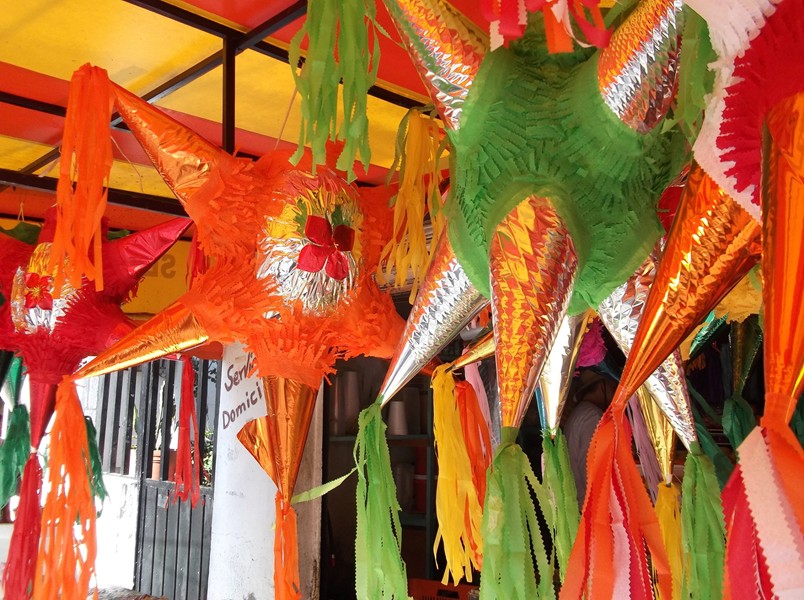
Traditional Mexican papier mâché piñatas
Tlalpan, Mexico City, 2012
Mexican piñatas boast a vibrant history, weaving together
ancient rituals and colonial ingenuity. Their roots trace back to
the Aztecs, who used decorated clay pots filled with treasures as
offerings to their gods. Spanish missionaries, arriving in the 16th
century, saw an opportunity. They adapted the tradition, replacing
the pots with papier-mâché creations adorned with seven
spikes symbolizing the seven deadly sins. These piñatas became
tools for catechism, representing the triumph of good over evil
as participants batted blindfolded at the tempting treats within.
The popularity of piñatas soared beyond religious purposes,
becoming a staple at Mexican festivities, particularly birthdays
and posadas, the nine-day celebrations leading up to Christmas.
Today, piñatas come in all shapes and sizes, from playful
cartoon characters to elaborate cultural icons. The act of breaking
the piñata remains a joyous ritual, symbolising overcoming
challenges and sharing blessings with loved ones. Although their
religious significance has waned, Mexican piñatas continue
to embody a spirit of fun, unity, and cultural heritage, ensuring
their place as a beloved symbol of Mexican celebrations.


