|
|
  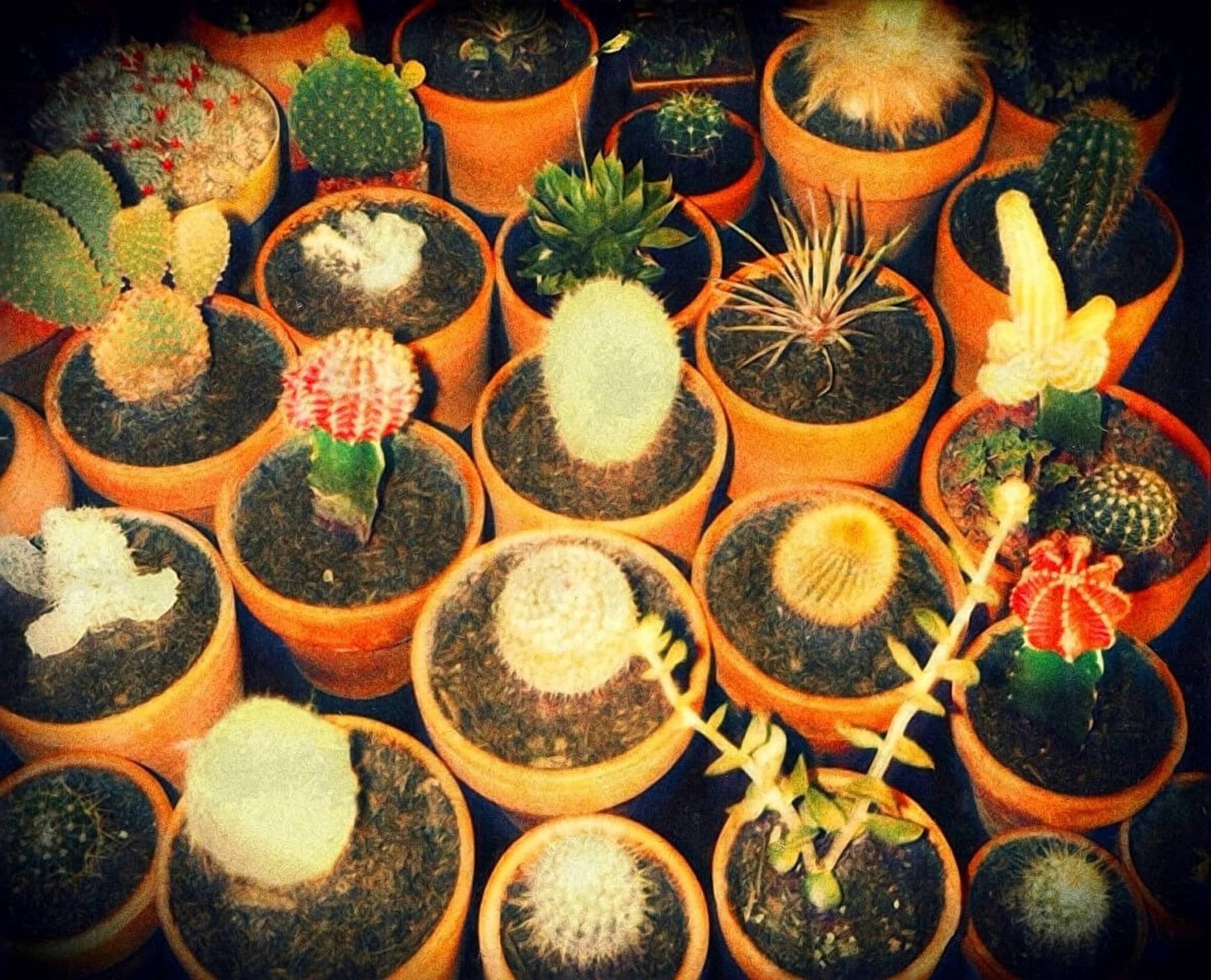
Miniature cacti and succulents Photograph by R.C.N, 1991 Miniature cacti, distinguished members of the Cactaceae family, are characterised by a suite of remarkable adaptations that enable their survival and proliferation in arid environments. These adaptations encompass genetic, morphological, physiological, and ecological facets. Genetically, these cacti often arise from mutations or developmental alterations affecting key regulatory genes governing growth and development, resulting in reduced stature and compact morphology. Morphologically, they exhibit shorter stems with tightly packed areoles, facilitating water retention and minimising surface area for transpiration. Their growth habit tends towards dense clustering, maximizing space utilisation and further reducing water loss. Modified spines, often shorter and softer compared to larger cacti, serve both as water-conserving structures and as deterrents against herbivory. Physiologically, miniature cacti employ various mechanisms to thrive in water-stressed environments, including specialized water-storing tissues such as parenchyma and mucilage-filled cells in stems and roots. Many species also adopt Crassulacean Acid Metabolism (CAM) photosynthesis, opening stomata at night to reduce water loss during the day. Ecologically, miniature cacti exhibit adaptability to shallow soils, with shallow root systems adept at exploiting moisture from rain showers or dew. Some species demonstrate habitat specialisation, favouring microhabitats with specific soil compositions, sun exposure levels, or moisture regimes. Beyond their scientific significance, miniature cacti hold cultural value as ornamental plants, admired for their diverse shapes, vibrant flowers, and symbolic representation of resilience in harsh environments. Thus, miniature cacti serve as compelling examples of evolutionary adaptation, offering insights into plant survival strategies in arid ecosystems. |
|


