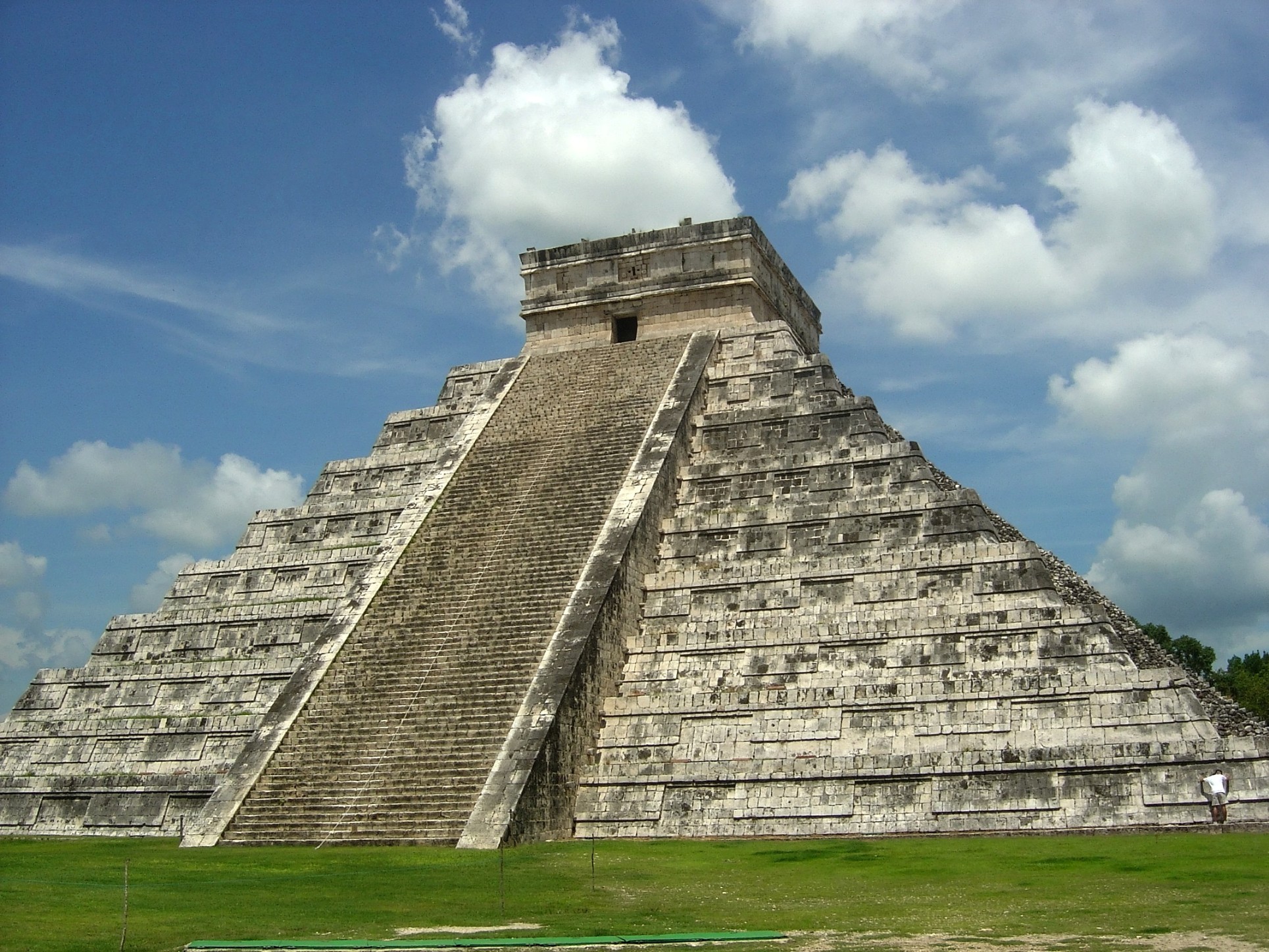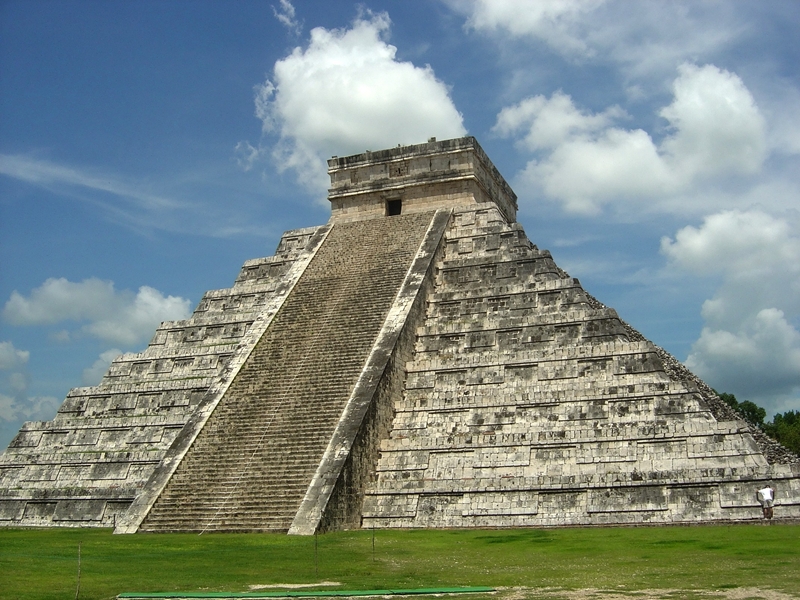
The Temple of Kukulcán (El Castillo), Chichén
Itzá
Photograph by M.O.G.G., 2006
Chichén Itzá, a UNESCO World Heritage Site located in the Yucatán
Peninsula of Mexico, is one of the most significant archaeological
complexes of the Maya civilisation, with its most iconic structure
being the Temple of Kukulcán, also known as El Castillo. This step-pyramid,
dedicated to the feathered serpent deity Kukulcán, exemplifies the
Maya's advanced understanding of astronomy, mathematics, and engineering.
The pyramid has four sides, each with 91 steps, which, when combined
with the single platform at the top, total 365 steps—matching the
number of days in a solar year. During the spring and autumn equinoxes,
a remarkable play of light and shadow creates the illusion of a serpent
slithering down the pyramid's steps, symbolising Kukulcán’s descent
to Earth. Beneath the visible structure lies an older pyramid, and
further excavations revealed a subterranean cenote (sinkhole), believed
to have been a site for sacred rituals. Built during the Terminal
Classic period (c. 800–1000), the Temple of Kukulcán reflects the
fusion of Maya and Toltec influences, displaying intricate carvings,
including depictions of warriors and serpents, which highlight the
cultural and religious syncretism of the time.